








Why ServiceNow’s Armis Acquisition Changes the Rules of Cyber Defence
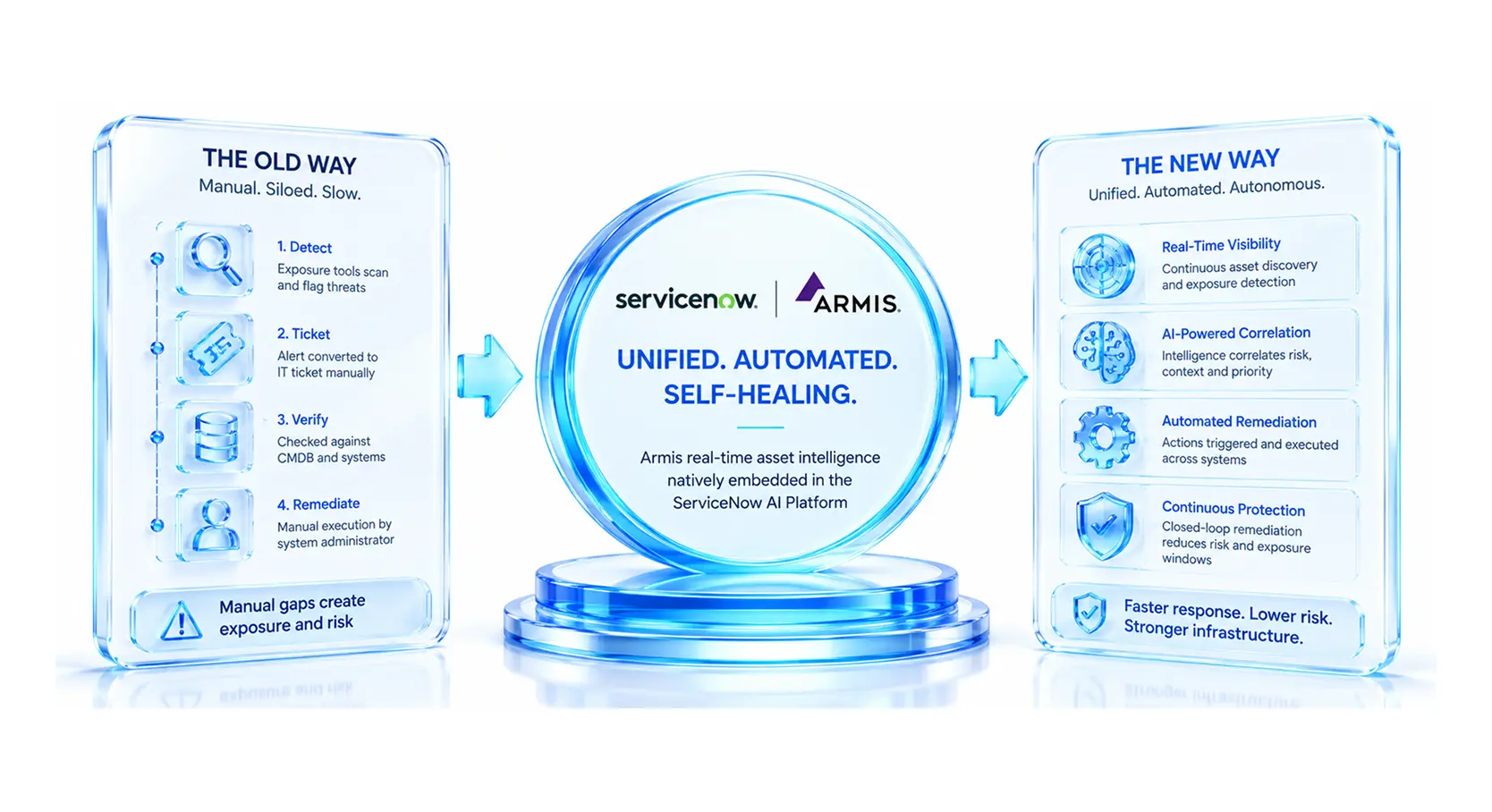
Most enterprise cybersecurity structures suffer from a critical architectural disconnect: they have the data to see a threat, but they lack the automated systems to fix it. For years, Chief Information Security Officers (CISOs) have built complex, multi-vendor security stacks. Security Operations Center (SOC) teams use exposure management tools to scan networks, flag vulnerabilities, and fire off critical alerts. But once an alert drops, the automation stalls.
The security alert must be manually converted into an IT ticket, handed off across disconnected departments, verified against a configuration management database (CMDB), and manually executed by a system administrator. This manual gap between detecting a risk and remediating it creates a dangerous window of exposure—especially in an era where cybercriminals leverage generative AI to automate attacks and exploit vulnerabilities at machine speed.
To close this operational gap, ServiceNow (NYSE: NOW) finalized its $7.75 billion cash acquisition of Armis, a market leader in cyber exposure management. By embedding Armis' real-time asset intelligence natively into the ServiceNow AI Platform, ServiceNow has unified detection and response into a single, self-healing system of action.
At Toptech, we recognize this acquisition as a fundamental paradigm shift for enterprise infrastructure protection. Here is our strategic analysis of how this combined security fabric operates and what it means for the future of autonomous defense.
Bridging the Gap: The Asset-to-Identity Security Fabric
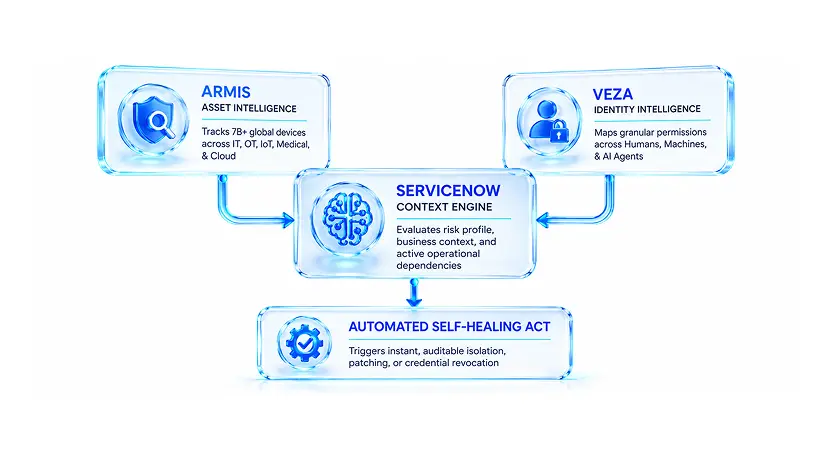
The Armis acquisition does not stand alone. It represents the second half of a massive, double-pronged security strategy executed by ServiceNow, building directly on its acquisition of identity intelligence pioneer Veza.
When combined, these platforms solve the two hardest questions in modern cybersecurity: What assets live on my network, and who (or what) has permission to access them?
By routing these two distinct data streams into ServiceNow's native Context Engine and AI Control Tower, the platform builds a complete, real-time map of your active attack surface:
- Real-Time Physical and Virtual Discovery: Armis tracks nearly 7 billion connected devices globally. Its non-invasive asset intelligence engine scans beyond traditional IT endpoints to uncover vulnerabilities across Operational Technology (OT), the Internet of Things (IoT), medical devices, physical AI infrastructure, and cloud/code repositories
- Granular Privilege Mapping: Veza simultaneously maps fine-grained permissions across human staff, machine-to-machine integrations, and autonomous AI agents.
- Contextual Risk Prioritization: Instead of burying your SOC in thousands of uncontextualized alerts, the platform evaluates an exposure against your active business operations. If an infected IoT device is connected to a non-critical network segment, it is prioritized differently than an exposed server sitting directly next to your primary financial ledgers.
Shifting From Alerting to Autonomous Remediation
The operational advantage of this architecture is its ability to turn security insights into immediate, automated action. When Armis identifies a high-priority exposure or an active compromise, the signal flows natively into automated workflows to trigger immediate remediation.
The Modernized Security Operations Framework
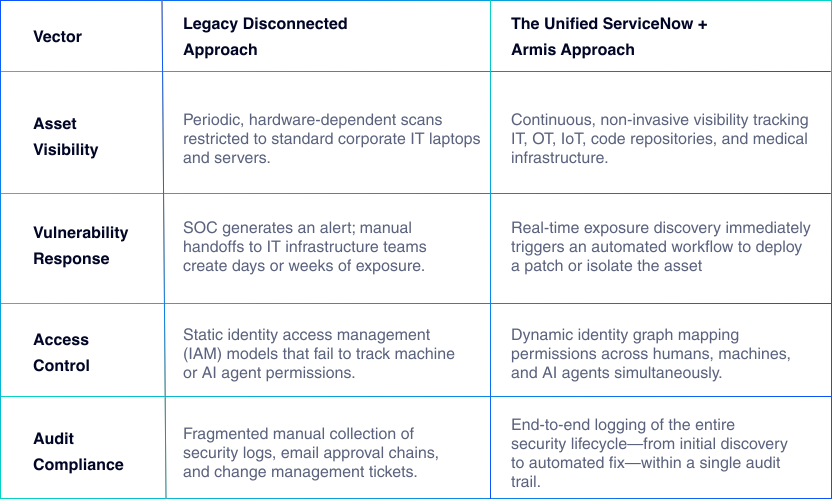
To accelerate this defensive shift, ServiceNow has established a global AI Center for Cyber Defense. This dedicated hub focuses on engineering AI-native security stacks that neutralize emerging, automated threats before they can disrupt corporate operations.
Expanding the Market Scope
This integration more than triples ServiceNow's total addressable market for security and risk solutions, bolstering a security business division that had already surpassed $1 billion in annual contract value (ACV). For enterprise planning, this consolidation means you can begin migrating away from expensive, fragmented security point solutions and centralize your operations under a highly resilient corporate framework. Furthermore, Armis Centrix™ will continue to be fully supported as a standalone product, ensuring maximum architectural flexibility for hybrid environments.
Toptech Consultancy Tips: Preparing for Unified Exposure Management
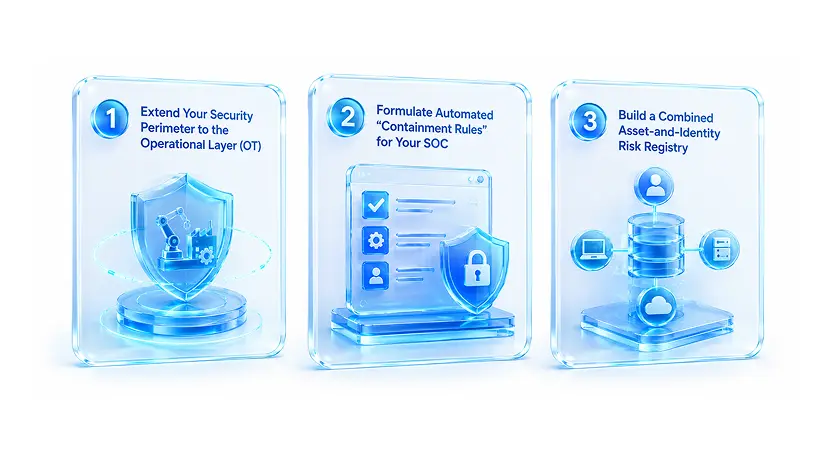
Transitioning your corporate infrastructure from reactive, alert-heavy firefighting to automated cyber defense requires deliberate platform staging. Our enterprise risk consultants at Toptech recommend implementing three tactical steps:
Extend Your Security Perimeter to the Operational Layer (OT)
If your organization runs manufacturing floors, critical supply chain infrastructure, or healthcare environments, prioritize deploying Armis across your Operational Technology (OT). Traditional IT security tools are blind to these specialized environments, leaving them highly vulnerable to lateral network attacks.
Formulate Automated "Containment Rules" for Your SOC
Work alongside your security directors to define clear, pre-approved orchestration rules within the AI Control Tower. Determine which classifications of non-critical assets (like guest-network IoT hardware or localized print servers) can be isolated automatically by the system the moment an anomaly is detected, and which high-value systems require a human-in-the-loop validation path.
Build a Combined Asset-and-Identity Risk Registry
Leverage the unified data coming from your Armis and Veza integrations to build a centralized risk directory. Ensure your platform configuration management database (CMDB) continuously links every physical and virtual asset to its authorized human owners and digital agents, giving your defensive systems instant clarity on access paths during a security event.