








Beyond Co-Pilots: Why ServiceNow’s Autonomous Workforce Rollout Outdates Task-Based AI
The enterprise consensus on Artificial Intelligence has reached a turning point: advisory AI has run its course. For the past few years, the market has been flooded with point-solution "co-pilots" and chat-based assistants. While these tools excel at answering basic questions or drafting summaries, they leave the most resource-intensive phase of the enterprise loop incomplete: actually finishing the work.
When an AI merely hands a refined ticket or recommendation back to a human employee, it creates an operational bottleneck. True automation requires digital entities capable of sensing a business problem, making contextual decisions, and executing multi-system workflows without manual intervention.
At Knowledge 2026, ServiceNow (NYSE: NOW) addressed this execution gap by expanding its Autonomous Workforce layer. Rather than offering basic conversational plug-ins, ServiceNow has introduced functional, role-scoped AI Specialists across every primary business vertical—including IT, CRM, Employee Services, and Security & Risk.
At Toptech, we recognize this as a shift from task-assisted AI to fully autonomous workforce operations. Here is our strategic analysis of how these new specialized agents operate and how C-suites can utilize them to optimize core business processes.
Shifting From Chatbots to Digital Employees
The primary architectural differentiator of a ServiceNow AI Specialist is that it does not exist in an isolated browser tab or external point system. These digital agents operate natively on top of your existing platform infrastructure—leveraging the shared CMDB, Workflow Data Fabric, and the real-time Context Engine.
Because they inherit your organization’s pre-established data logic, user profiles, and compliance policies, they can own entire functional roles end-to-end.
The Autonomous Workforce Cross-Functional Spectrum
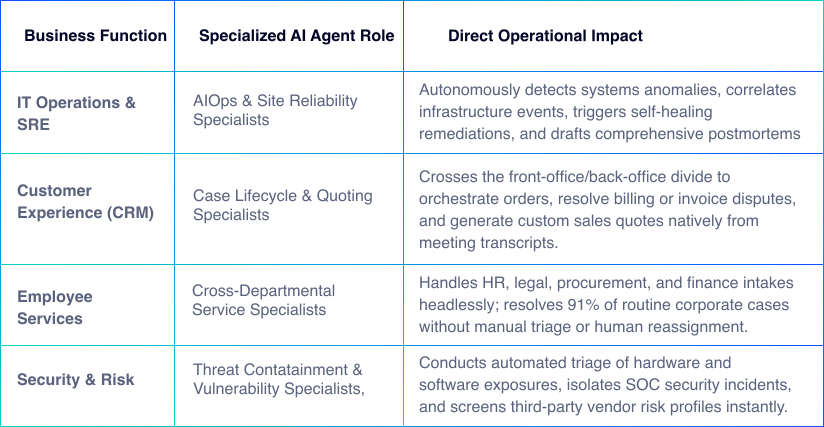
Real-World Validation: High-Velocity Case Resolution
The financial rationale behind moving toward an autonomous workforce is highlighted by initial enterprise deployment metrics. When digital employees are properly integrated into high-volume service architectures, the operational speed increases significantly:
- 99% Faster IT Resolution: Within native deployment models, the L1 IT Service Desk AI Specialist resolves assigned transactional cases 99% faster than manual processing, turning hours of waiting into seconds
- Massive Scale CRM Fulfillment: Early rollouts across major customer portfolios are processing over 100 million customer cases, orchestrating 16 million complex orders, and compiling 7 million automated quotes every single month.
- 91% Deflection Retention: By resolving multi-system requests at the point of ingestion (via EmployeeWorks), the Employee Services Specialist deflects complex issues before they ever turn into manual backlogs for HR, finance, or legal teams
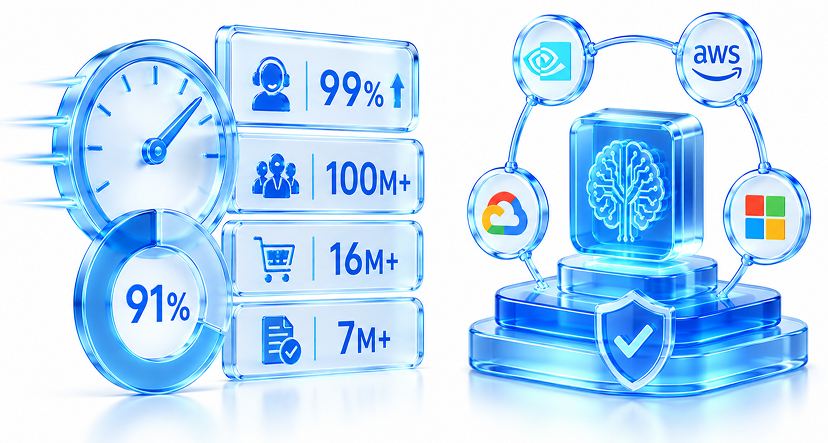
Furthermore, through strategic alliances with NVIDIA (leveraging the NVIDIA Agent Toolkit), AWS, Google Cloud, and Microsoft, these digital workers can execute tasks seamlessly across multi-cloud models and hybrid environments.
The Core Licensing Advantage
C-suites and procurement leaders should note a critical structural detail: ServiceNow has natively embedded these underlying foundational frameworks (including EmployeeWorks and AI Control Tower governance) directly into its core tiering models rather than masking them as isolated, expensive add-on SKUs. Your organization can scale these specialized autonomous workers by building on top of your existing platform footprint, dramatically reducing your total time-to-value.
Successfully Deploying Autonomous Specialists
Transitioning your enterprise workflows from human-led triage to autonomous execution requires deliberate operational staging. Our senior consulting team at Toptech recommends focusing on three foundational vectors:
Shift from Fulfillers to Workflow Designers
As L1 IT, CRM, and employee service desks shift toward 90%+ autonomous resolution, reallocate your human staff’s bandwidth. Transition your Tier 1 support agents into process managers and workflow auditors. Their primary value shifts from answering repetitive questions to refining platform logic, handling complex escalations, and optimizing your broader automation architecture.
Map and Clean Your Integration Fabric
Autonomous CRM and Security specialists fail if they encounter fragmented data boundaries. Before activating an AI Specialist to resolve invoice disputes or isolate security events, ensure your ServiceNow instances are smoothly federated with your underlying ERP, financial ledgers, and SIEM tools. The digital worker can only move as fast as your integration fabric allows.
Establish Clear Human-in-the-Loop Thresholds
While total autonomy is the goal for routine tier-1 cases, complex security incidents or high-value sales renewals require strict boundaries. Use ServiceNow's AI Control Tower to explicitly program thresholds where an AI Specialist must halt autonomous execution and route the case to a human director for formal approval.
The next wave of corporate productivity will not be driven by giving employees better search tools or text generators; it will be driven by deploying an integrated digital workforce that operates directly within your primary systems of action. By deploying role-scoped AI Specialists that can think, decide, and act natively, enterprises can eliminate operational backlogs and allow their human workforce to focus entirely on high-value strategy.