








Restoring the Human Touch to Human Resources: The Architectural Power of Autonomous HR
No executive enters the field of Human Resources to manage an endless queue of operational support tickets. HR Business Partners (HRBPs) dedicate their careers to organizational design, workforce strategy, and guiding complex talent transformations. Similarly, people managers step into leadership roles to coach and grow their teams—not to lose hours chasing approvals across five disconnected software platforms.
Yet, routine administrative friction consumes the modern workday. Managers are bogged down by administrative screens, HRBPs act as tactical triage agents, and employees endure a frustrating multi-tab odyssey just to locate basic corporate policy data. The foundational problem is that legacy HR systems were engineered as static record repositories, not as dynamic platforms built for the era of autonomous execution.
To eliminate this systemic operational drag, ServiceNow has unveiled its latest Autonomous HR roadmap. Fed directly by the multimodal capabilities of the ServiceNow Otto AI experience, these advancements move beyond basic chatbot interactions. They are designed to automate heavy administrative tasks, surface real-time workforce intelligence, and allow your human teams to focus on high-consequence strategy.
At Toptech, we analyze how this shift toward an autonomous, data-integrated HR ecosystem redefines workforce productivity for the C-suite.
The Autonomous HR Spectrum: Redefining Three Core Enterprise Roles
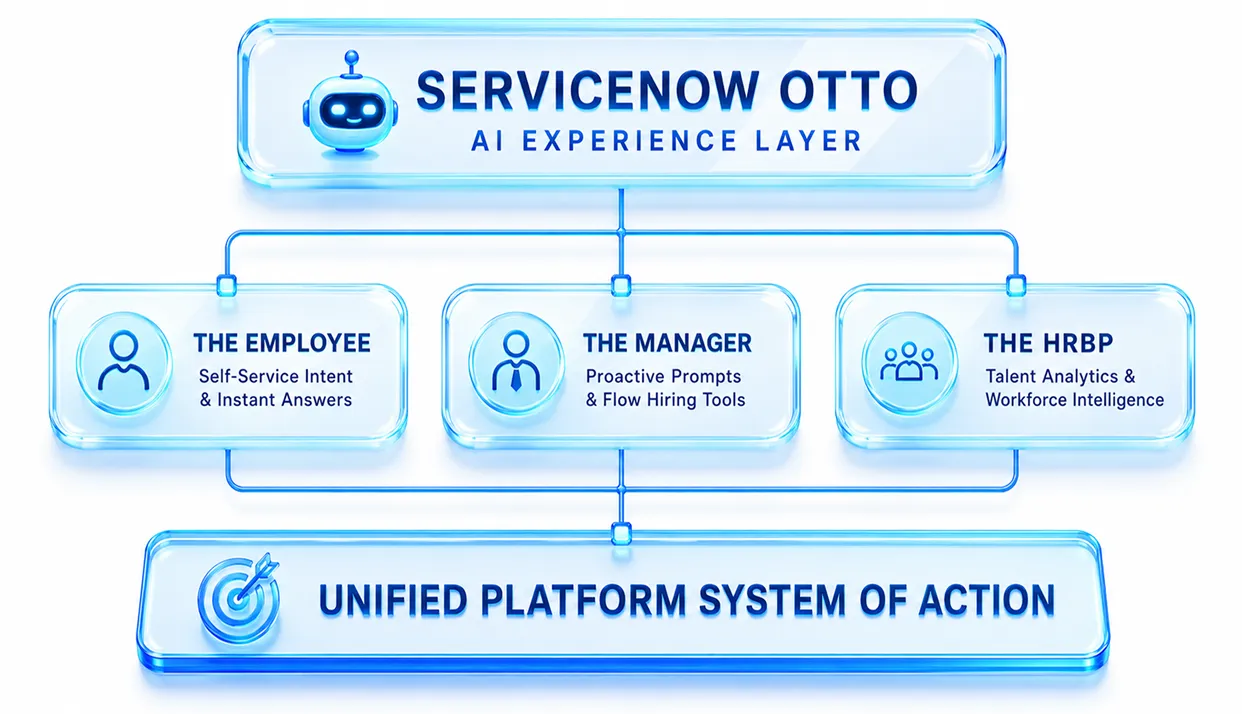
Autonomous HR operates by embedding role-scoped AI capabilities directly inside the established HR Service Delivery (HRSD) framework, altering the workflow dynamics for employees, managers, and HR business partners simultaneously.
The HRBP Experience: From Tactical Doer to Strategic Advisor
Launching in Q3 2026, this suite utilizes natural language talent analytics and real-time workforce intelligence to free HRBPs from routine administration. Instead of manually pulling reports, HRBPs can query complex talent metrics conversationally, allowing them to instantly analyze retention risks, map organizational design changes, and shift their focus toward high-value corporate advisory roles.
The Next-Generation Manager Experience: Proactive Leadership Companionship
Rolling out in the second half of 2026, this interface introduces a proactive intelligence layer that surfaces talent insights, development goals, and team recommendations before a manager goes looking for them. Rather than restricting reviews to an annual event, a 1:1 conversation assistant makes performance tracking continuous. Routine tasks—such as processing promotions, managing sensitive policy escalations, and executing team hiring—occur conversationally right within the active workspace.
The Employee Experience: Immediate Conversational Resolution
Employees gain a single, friction-free interface to resolve complex requests. Instead of searching across disconnected intranet portals, employees use conversational language to receive personalized answers tailored to their specific corporate profile, geography, and department.
The Intelligence Multiplying Factor: Strategic HR Ecosystem Partnerships

An autonomous HR framework cannot operate efficiently on isolated data. To maximize the accuracy of its context engines, ServiceNow is integrating premier external market intelligence directly into its unified governance platform.
Through new ecosystem alliances and Model Context Protocol (MCP) integrations, the platform synthesizes data across three industry-leading providers:
- The Josh Bersin Company (Galileo®): Connects external HR benchmark data, operational intelligence, and labor market trends directly into the workforce planning interface. This provides managers and HRBPs with immediate access to deep research insights that previously required hours of manual aggregation.
- Findem: Operates via an MCP integration to pipe advanced talent market data into active workflows. This gives the system direct access to a proprietary dataset containing 850 million talent profiles and over 1.6 trillion expert-labeled data signals, enabling data-driven talent acquisition decisions at machine speed.
- Phenom: Extends specialized AI sourcing and personalized candidate engagement directly into the core platform workspace, closing the loop from macro talent strategy to precise pipeline execution.
Breaking Down Departmental Silos
The fundamental advantage of deploying Autonomous HR on a unified workflow engine is that HR requests rarely stay confined to HR. An employee onboarding or parental leave request naturally requires cross-functional orchestration across IT (for software provisioning), Finance (for payroll adjustments), Procurement (for hardware distribution), and Legal (for contract validation). By running these specialized agents on a shared platform, your organization eliminates fragile cross-departmental API integrations, managing the entire lifecycle within a single, secure governance layer.
Preparing Your HR Architecture for Autonomy
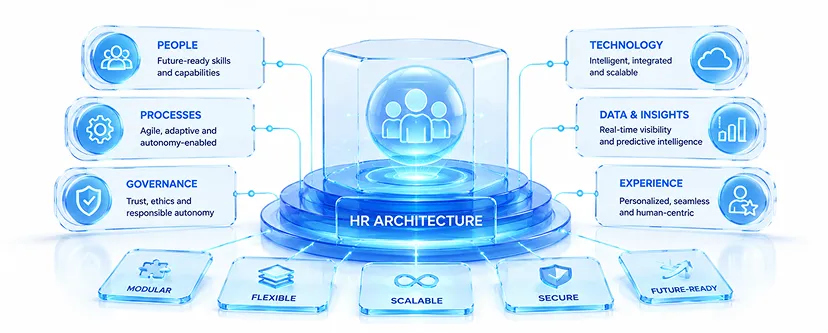
To ensure a smooth transition toward a governed, AI-driven employee experience, our senior consultants at Toptech recommend prioritizing three foundational initiatives:
Clean and Centralize Internal Policy Logic
Autonomous HR engines rely entirely on the data used to train and inform them. If your corporate wikis, employee handbooks, and localized policy documents contain conflicting information regarding benefits, leave policies, or travel expenses, your AI agents will surface inconsistent responses. Execute a rigorous audit to establish a clean, single source of truth for your internal knowledge management systems.
Upskill Managers for Continuous Performance Leadership
The transition to a "next-gen manager experience" eliminates the administrative overhead of tracking milestones, but it demands higher emotional intelligence from leadership. Train your people managers to utilize the real-time recommendations and 1:1 conversation assistants to foster continuous development, shifting away from rigid, compliance-driven annual check-ins.
Enforce Universal Role-Scoped Permissions
Because the new talent analytics suites pull deeply sensitive personnel data to generate workforce insights, establishing strict data boundaries is critical. Work with your information security teams to configure precise, role-scoped access controls within the AI Control Tower. Ensure that managers and digital agents can only query data that aligns with their explicit corporate authorization level.
The true metric of a successful enterprise AI strategy is its ability to liberate your workforce from routine administrative burdens. By combining proactive managerial intelligence, deep external talent market insights, and cross-departmental workflow orchestration into a single governed system, Autonomous HR allows your leadership teams to stop managing queues and get back to the human element of corporate growth.