








The Cure for "Vibe Coding" Risk: Why ServiceNow’s Build Agent Integration with GitHub Copilot, Cursor, and Claude Code Changes Everything
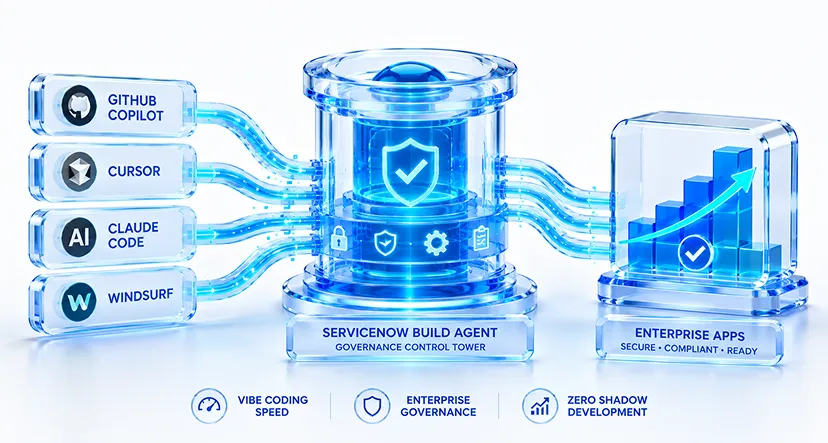
The enterprise software landscape has entered the era of "vibe coding"—a phenomenon where developers, business analysts, and even citizen builders use natural language prompts to spin up fully functional applications in minutes. AI coding tools have undeniably shattered previous speed limits for software generation.
However, for CIOs, CISOs, and enterprise architects, this breakneck speed brings an underlying anxiety: unmanaged technical debt and the compounding threat of shadow development. When applications are built outside of a governed architecture, they lack compliance hooks, performance tracking, audit trails, and data safety mechanisms. Speed without governance yields applications that look ready but are fundamentally unfit for enterprise deployment.
At Knowledge 2026, ServiceNow (NYSE: NOW) unveiled a major structural remedy to this exact friction point. ServiceNow Build Agent is now Generally Available (GA) inside ServiceNow Studio, and critically, its core capabilities have been extended directly into the world’s most popular extee
Breaking Down the Architecture: Unifying Any IDE with One Platform Control Tower
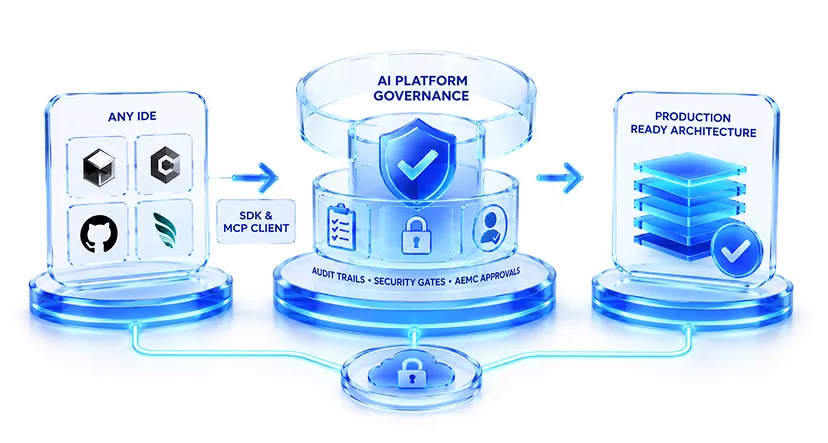
Historically, if you wanted to build an enterprise-ready ServiceNow application, your team had to operate strictly within native platform interfaces. This sometimes created a friction point for elite developers accustomed to high-performance local IDEs (Integrated Development Environments) and third-party AI coding agents.
The new integration architecture rewrites this dynamic through three core components:
The ServiceNow SDK & MCP Client Ecosystem
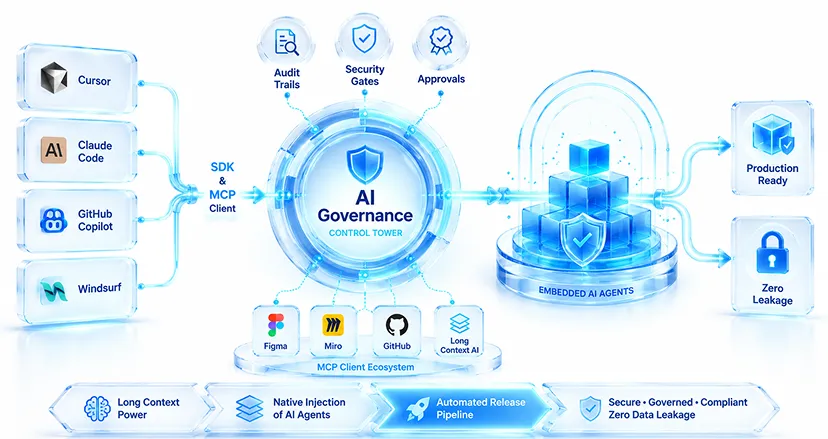
Instead of isolating its intelligence, ServiceNow has weaponized its context. By utilizing the ServiceNow SDK, developers can inject native platform intelligence, live data schemas, and internal policy rules directly into external IDEs. Furthermore, Build Agent operates as a Model Context Protocol (MCP) Client, meaning it can dynamically ingest design specs from Figma, user requirements from Miro, and code states from GitHub, consolidating them seamlessly before execution.
Long-Context Power via Anthropic Models
For teams choosing to build natively within the reimagined ServiceNow Studio, Build Agent is now powered by Anthropic's advanced models. This shift allows for significantly longer context windows, meaning a developer can map out, test, and iterate on highly complex, multi-layered enterprise workflows over extended sessions without the model losing structural continuity or forgetting foundational logic gates.
Native Injection of AI Agents
When your teams build a custom application via Build Agent, the system natively embeds in-app AI agents into those application workflows by default. These digital agents aren't just static chat systems; they are built to actively interpret user intent, surface live cross-departmental insights, and execute actions securely under the safety rails of your platform's security profiles.
Toptech Consultancy Tips: Scaling Governed AI Development Safely
Deploying an open-ended, AI-assisted development strategy requires deliberate structural preparation. Our advisory architects at Toptech recommend implementing the following blueprints:
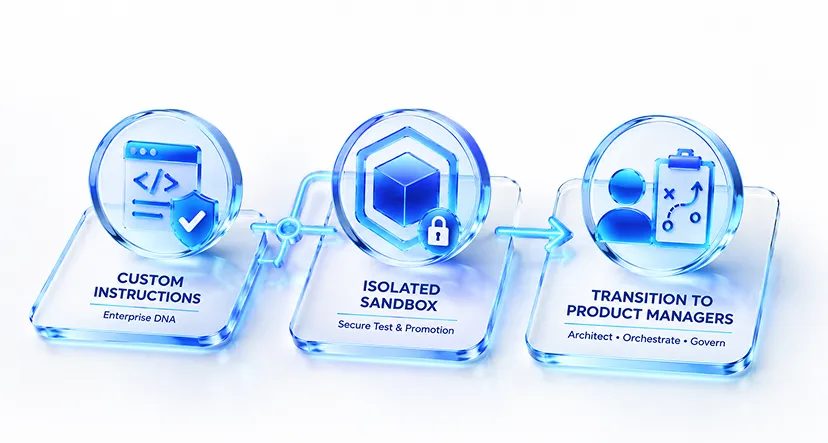
Encode Your Enterprise DNA into "Custom Instructions"
Build Agent allows organizations to program specific "Custom Instructions" directly into its core engine. Do not leave this blank. Work with your enterprise security, compliance, and UI/UX teams to explicitly codify your corporate standards, custom code patterns, and data classification policies into these instructions. This ensures that every line of code generated by an AI assistant inherently complies with your unique corporate framework from the very first prompt.
Establish Isolated Sandbox Protocols
Because Build Agent allows multi-scope customization—meaning developers can now use AI to extend out-of-the-box ServiceNow modules alongside bespoke applications—the risk of collateral workflow disruption is high. Ensure your development pipeline routes all external IDE connections directly into isolated developer sandboxes equipped with automated, self-healing test loops before promotions occur.
Transition from Fulfillers to Product Managers
As Build Agent automates nearly 80% of routine coding and configuration tasks, your traditional platform developers must transition their skill sets. Their value will no longer lie in writing repetitive scripts; it will lie in process architecture, data model integrity, and orchestrating the security guardrails of the AI agents built by the platform. Start upskilling your platform teams for this architectural oversight role today.
The Strategic Bottom Line
The business case for ServiceNow's expanded Build Agent architecture is clear: it eliminates the forced choice between developer speed and enterprise governance. By allowing developers to use the cutting-edge AI coding tools they love while ensuring every output passes through a rigorous, automated enterprise control tower, organizations can safely accelerate their digital transformation roadmap without incurring massive operational debt.
Is your development team currently leveraging external AI coding tools like Cursor or GitHub Copilot, and how are you managing the resulting compliance and technical debt risks? Let's discuss in the comments below, or reach out to our enterprise architecture team at Toptech for an integration workshop.