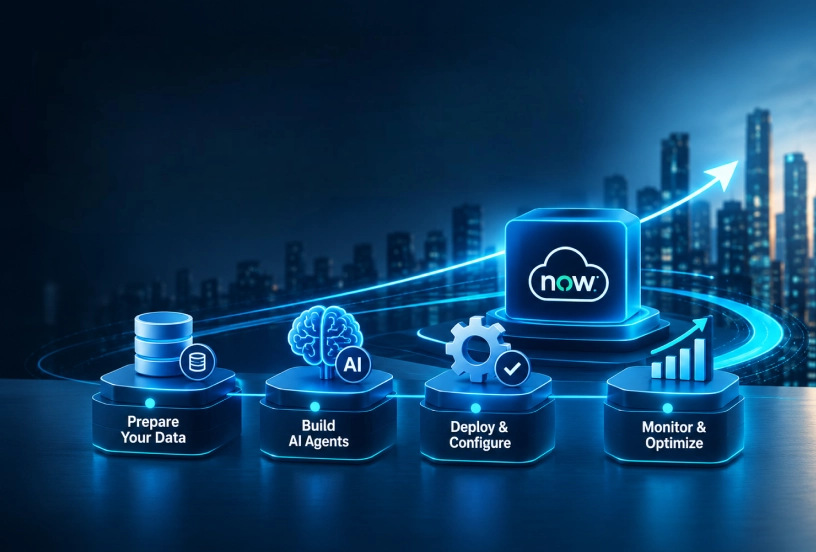






The Architecture Blueprint: AI Passport and Enforceable Runtime Governance
Enterprise AI governance fails when policies live in static documents or disconnected API gateways; true control requires cryptographically signed runtime credentials that enforce authorized agent scope and single-call revocation at every network edge.
As autonomous AI agents shift from answering conversational prompts to executing multi-system business transactions, traditional gateway policies create dangerous blind spots. When an agent touches an ERP endpoint on one cloud and a payment gateway on another, static rules fail to answer a basic operational question: Does this agent actually possess the attested authority to execute this specific action right now?The Architectural Shift: Static Rules vs. Cryptographic Attestation
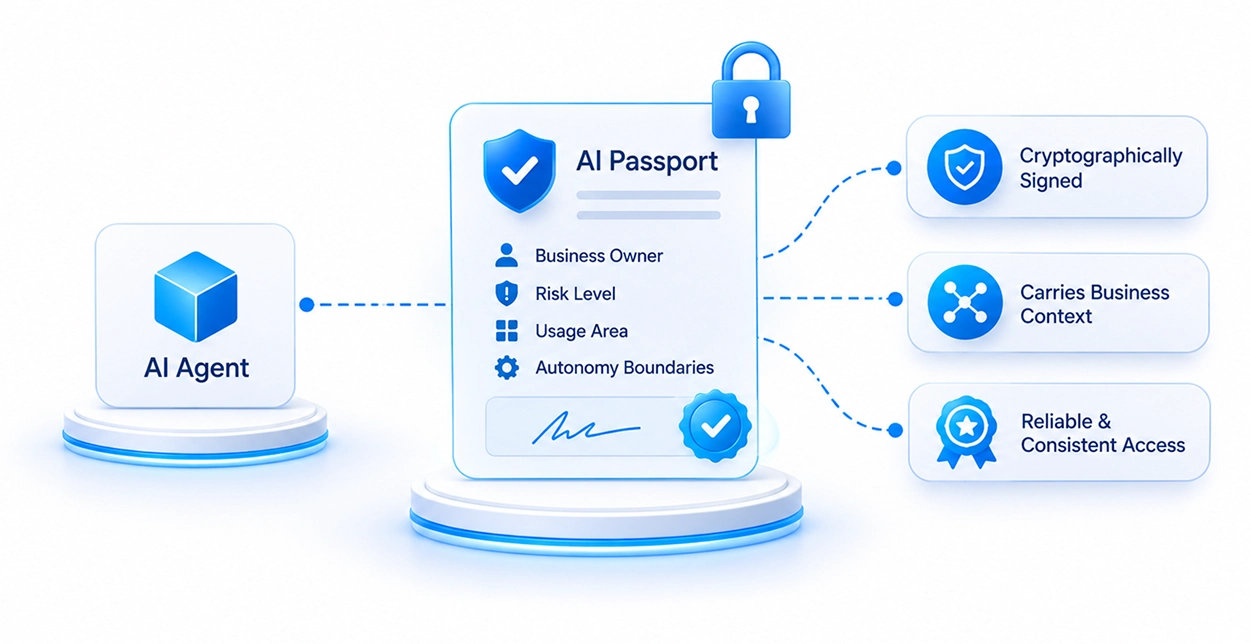
Traditional enterprise governance relies on perimeter API gateways evaluating static policy rules. ServiceNow AI Passport Engineering Specification outlines that static policy engines suffer from inconsistent business context. If an upstream policy service drops or fails open, an agent denied at one gateway might be allowed at the next.
AI Passport replaces static perimeter rules with an open, cryptographically signed record bound directly to the agent asset.- The Mechanism: Built as a plain JSON payload with a detached signature, the AI Passport travels with the agent across multi-agent workflows. It embeds verifiable business metadata: the assigned business owner, risk classification level, authorized usage area, and explicit autonomy boundaries.
- Our Advisory Take: Moving from perimeter IP filtering to portable, signed payload credentials is a vital architectural leap. However, platform teams must ensure their Configuration Management Database (CMDB) data hygiene is spotless—an AI Passport is only as trustworthy as the underlying asset and owner records used to issue it.
Edge Enforcement & The "Fail-Closed" Governance Rule
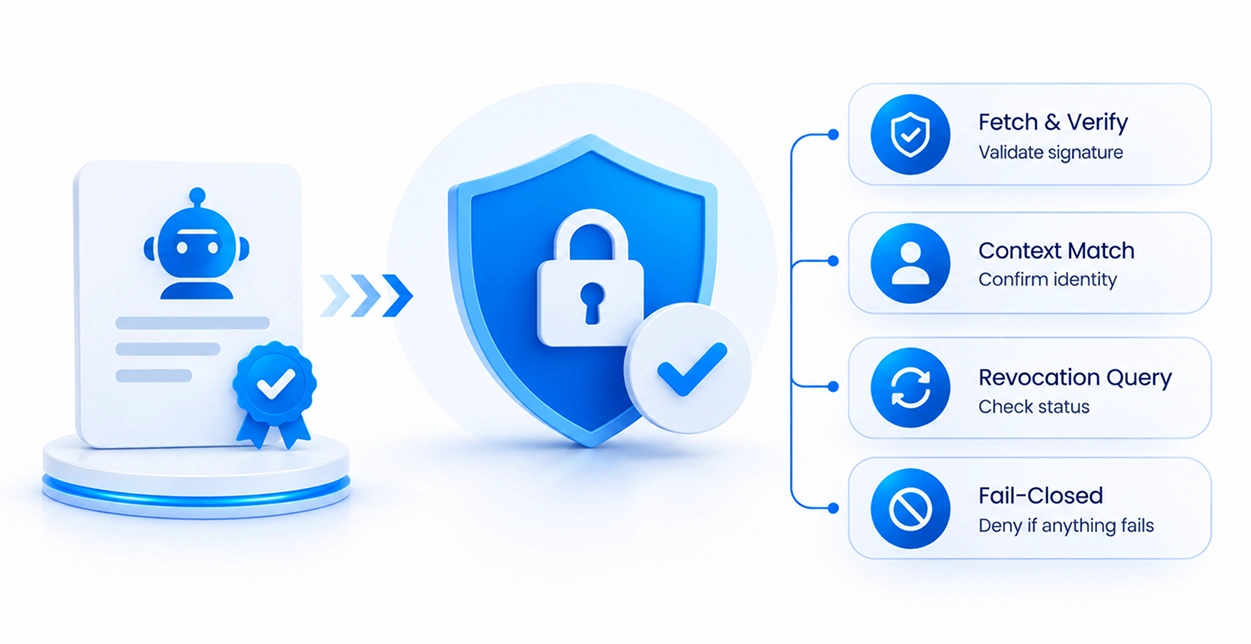
According to ServiceNow AI Passport Press Announcement, governance must be enforceable at the edge across first-party and third-party AI agents.
In the open specification, any enforcement point—whether a cloud API gateway, an Model Context Protocol (MCP) server, or an internal microservice—runs a lightweight, 50-line verification check:1. Fetch & Verify: Retrieve the agent’s Passport and validate the detached cryptographic signature.2. Context Match: Confirm the authenticated identity matches the passport's bound identities and usage area.3. Revocation Query: Execute a single-call Revocation Check v1 endpoint to confirm active standing.4. Fail-Closed Default: If any attribute is missing, unverified, or unreachable, the enforcement point automatically denies execution."If a gateway can't get an answer, it denies." — ServiceNow Engineering TeamDesigning edge enforcement to fail closed by default is essential for preventing rogue AI actions during network partitions. What many enterprise implementations miss is establishing the necessary operational SLAs around the revocation endpoint itself so business-critical workflows aren't prematurely throttled.The Single-Kill-Switch Architecture
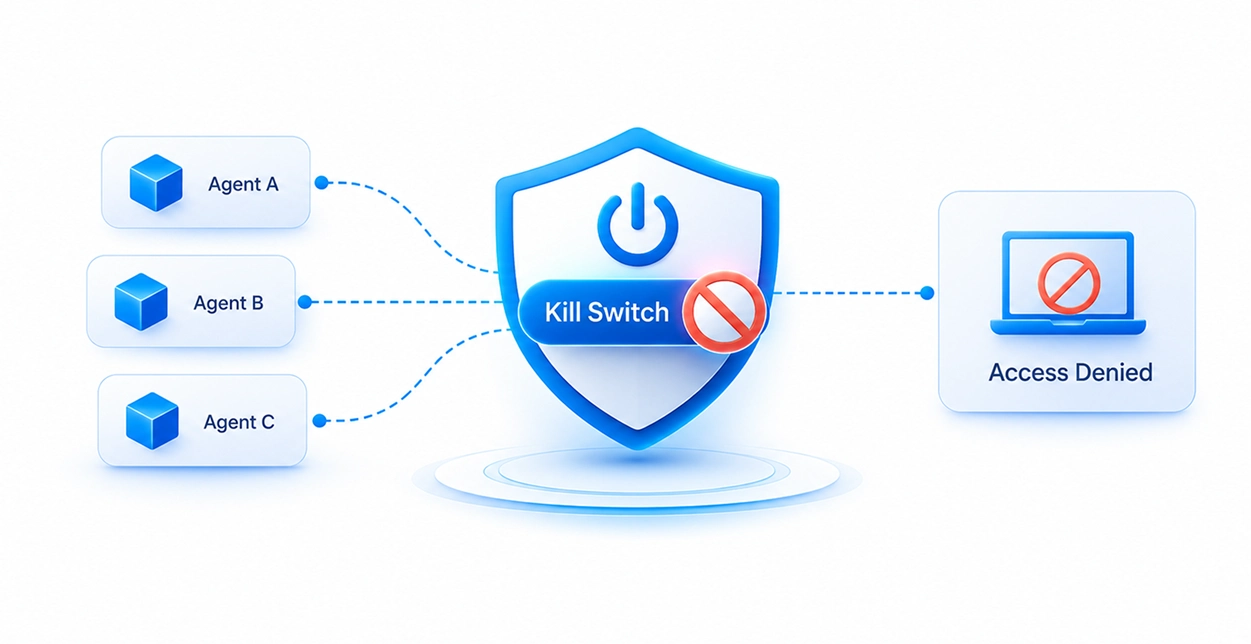
When a multi-agent workflow behaves unexpectedly—such as reading a compromised payload and attempting unauthorized financial transactions across multiple platforms—stopping it traditionally meant manually updating rules across several gateway consoles.
The ServiceNow Announcement highlights how the Super Intelligence Control Tower integrates with AI Passport to provide instant, global kill-switch functionality. By revoking an agent's passport status at a central issuer, every connected edge enforcement point immediately denies subsequent requests on its next check.The true enterprise breakthrough of AI Passport isn't just stopping bad agents—it's establishing auditable, machine-speed proof of compliance for regulated industries before an incident ever occurs.Operationalizing AI Governance with TopTech
Deploying cryptographically signed AI credentials and edge enforcement requires robust CMDB integration, identity mapping, and precise policy architecture.
The certified platform architects at TopTech help enterprise leaders design end-to-end AI governance frameworks. From auditing CMDB asset intelligence and mapping identity entitlements to implementing Super Intelligence Control Tower capabilities, TopTech ensures your platform scales autonomous work safely and predictably.Partner with TopTech Consulting Services to secure your enterprise AI ecosystem with attested, edge-enforceable authority.