





Mapping GRC, Vulnerability Response, and SecOps
Security operations, vulnerability remediation, and enterprise GRC fail in isolation because treating them as separate disciplines creates fatal blind spots; true resilience occurs when all three execute against a single, shared CMDB data model.
When a critical vulnerability emerges, security teams patch, IT operations deploys, and risk officers assess compliance. When these functions operate in separate tools, handoffs stall and enterprise exposure multiplies.Where the Architecture Agrees: One CMDB Data Model
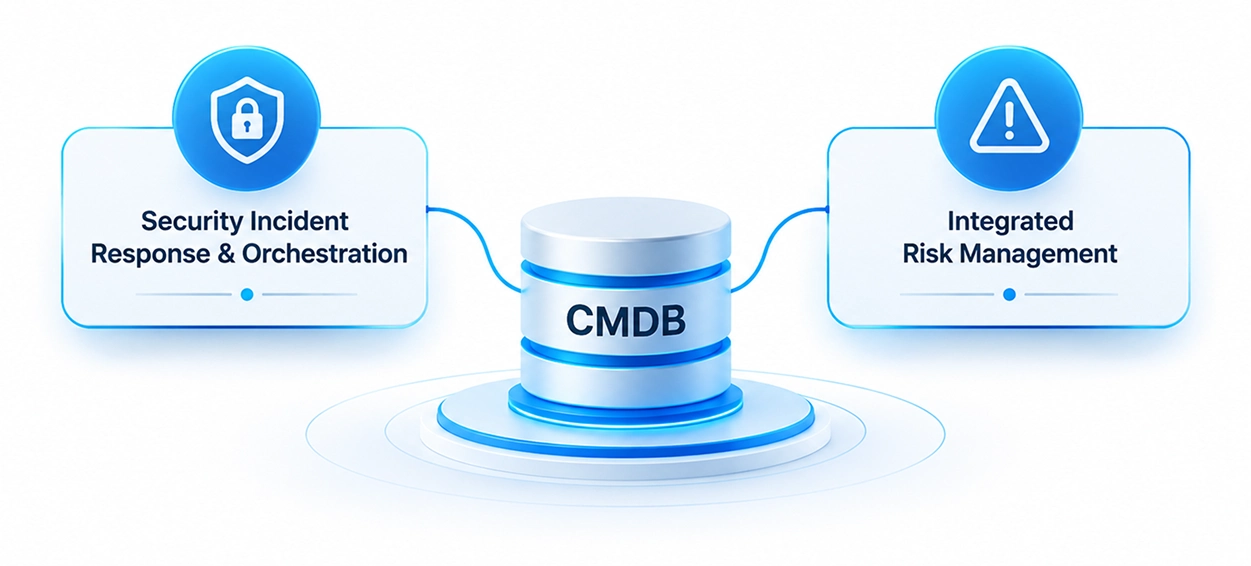
Unifying security operations and risk management onto the Now Platform eliminates data translation layers and manual spreadsheet handoffs.
Security Incident Response & Orchestration: Security Incident Response Documentation, automated workflow templates execute firewall blocks, isolate endpoint hosts, and enrich threat intelligence directly within task records.Automated containment playbooks drastically reduce Mean Time to Contain (MTTC). However, orchestration workflows are only as effective as your underlying network egress rules and credential governance.Integrated Risk Management (IRM): ServiceNow Integrated Risk Management Overview maps continuous compliance checks directly to underlying Configuration Items (CIs) in the CMDB.Mapping controls directly to digital assets transforms static quarterly audits into real-time posture assessments. The missing piece in most deployments is automated risk scoring based on live telemetry rather than manual self-assessments.Operational Points of Friction: Execution vs. Governance
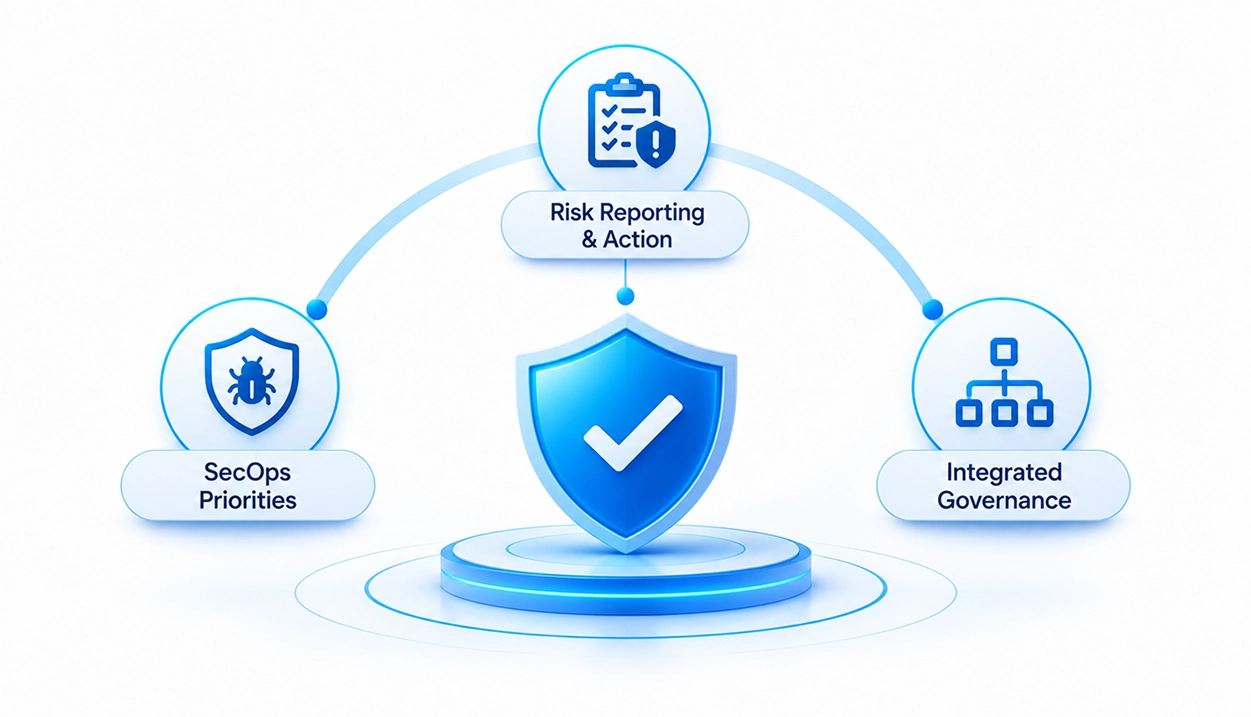
While the underlying data model is unified, operational teams often struggle to align daily priorities.
SecOps vs. Patch Priorities: SecOps Use Case Guide, SecOps teams prioritize threats based on exploitability, whereas IT infrastructure teams prioritize patch cycles based on operational uptime.Integrating Vulnerability Response with Service Mapping resolves this friction by automatically prioritizing vulnerabilities based on the business criticality of the affected CI, rather than relying on generic CVSS scores alone.Risk Reporting vs. Real-Time Action: GRC Risk Identification Playbook, Risk managers evaluate enterprise impact using structured playbooks and risk registers.Risk playbooks provide essential executive visibility, but they often lag behind active security incidents. True integration requires security incident state changes to automatically trigger risk score adjustments across affected business services.The true power of a single data model isn't just shared reporting—it's bidirectional automation. A critical vulnerability on a core ERP asset should instantly escalate the enterprise risk score, restrict access policies, and trigger priority patching without a single human handoff.Unresolved Challenges: What Platform Leaders Must Solve Next
1. CMDB Relationship Hygiene: A unified security model relies entirely on accurate CI relationship mapping. Inaccurate dependency mappings lead to false risk scores and misrouted incident tasks.
2. Alert Fatigue in the SOC: Integrating threat intelligence streams without automated triage rules overwhelms analysts with low-priority security events.3. Cross-Departmental Governance: Establishing joint SLAs between CISO teams, IT Operations, and Risk Officers requires clear leadership sponsorship beyond software configuration.Accelerate Your Security and Risk Architecture with TopTech
Unifying SecOps, Vulnerability Response, and GRC into a cohesive security framework requires deep technical expertise, CMDB alignment, and precise workflow design.
The certified security architects at TopTech help enterprise organizations configure integrated risk workflows, build automated containment playbooks, and eliminate platform technical debt. From CMDB health remediation to advanced SecOps orchestration, TopTech delivers end-to-end implementation and advisory support.Partner with TopTech Managed Services to unify your security data model and protect your enterprise with confidence.