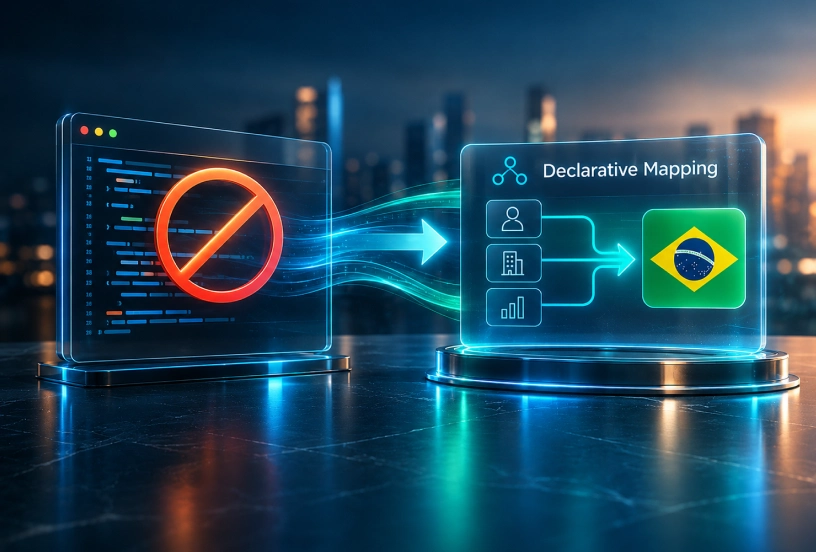






Modernizing Employee Experience with ServiceNow Brazil Release Updates
Deploying a self-service portal alone is not enough; enterprise workforce enablement needs unified workspace governance across departmental silos.
For CIOs, HR transformation leaders, and Platform Admins, optimizing employee engagement requires evaluating backend fulfillment pathways. This blog details how employee portals evolved into unified operational hubs in the Brazil release—and how to govern the transition.The Fragmented Portal Era
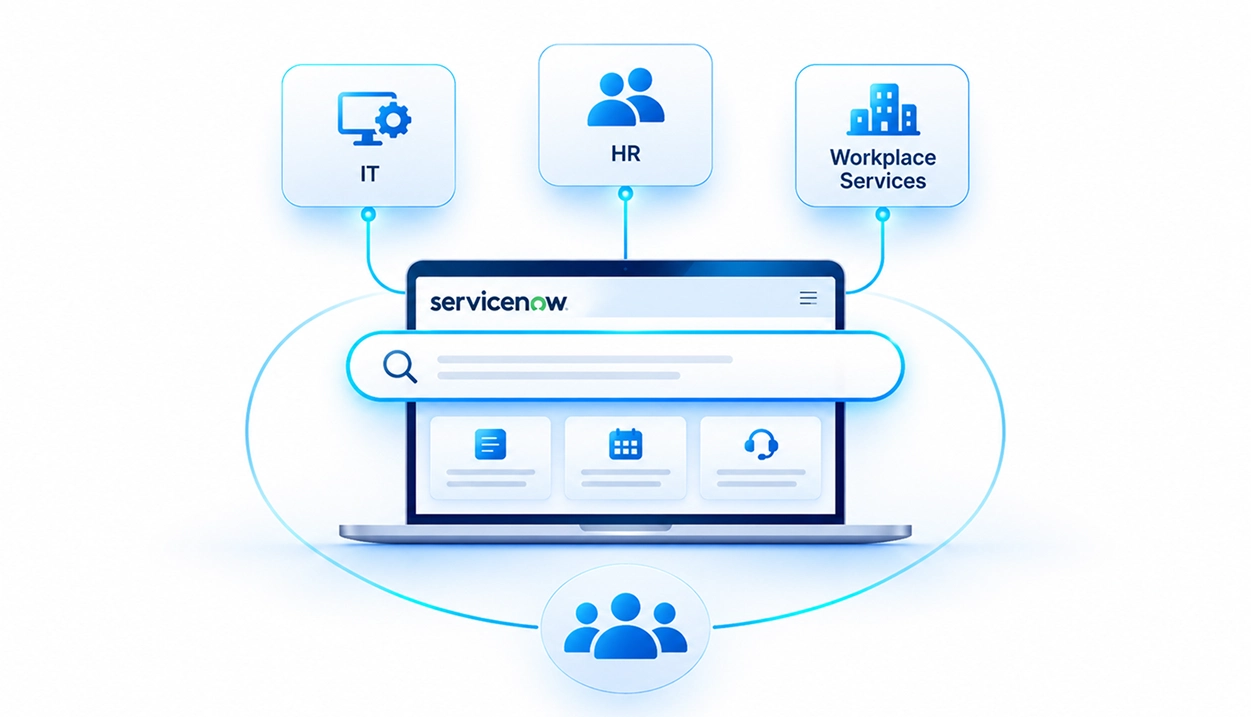
In earlier platform deployments, employee service experiences were split across disconnected portals and standalone departmental forms. Workers navigated disparate portals for HR inquiries, IT requests, and facilities updates, leading to low adoption and manual routing overhead.
Siloed portals fragment workforce productivity. Executive sponsors often mistake portal redesigns for process optimization, leaving broken backend handoffs untouched.The Shift Toward Workspace Consolidation
ServiceNow unified multi-departmental service catalogs into Employee Center Pro. Organizations gained unified search, targeted communications, and configurable taxonomies that brought IT, HR, and Workplace Services into a single portal framework.
Taxonomies require continuous maintenance. Administrators frequently deploy unified portals without establishing clear content ownership, resulting in duplicate search results.EmployeeWorks in the Brazil Release
The Brazil release family introduced EmployeeWorks updates focused on curated employee journeys and expanded workspace personalization, as detailed in the ServiceNow EmployeeWorks Release Notes. However, raw release tables confirm these features enhance portal presentation rather than underlying workflow logic.
Portal enhancements elevate user engagement. Leaders who deploy updated portal layouts without refactoring legacy catalog items risk polishing inefficient fulfillment workflows.The Four-Step Implementation Roadmap
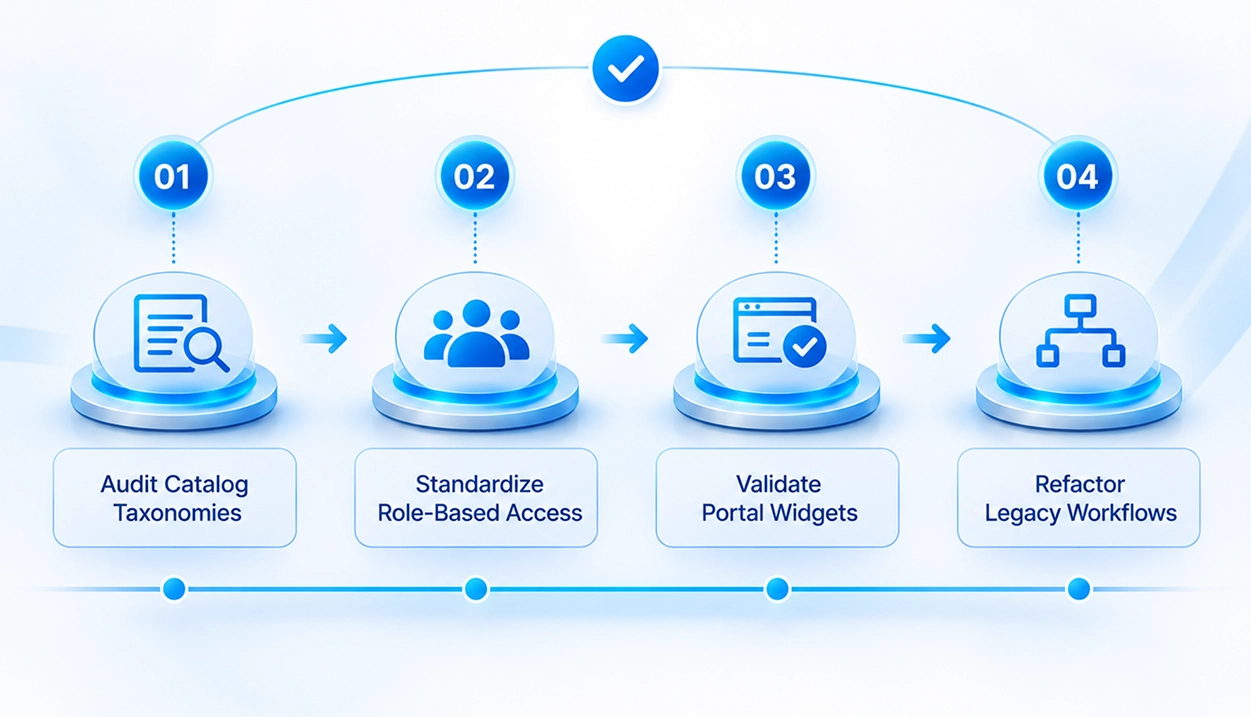
- Audit Catalog Taxonomies: The Platform Admin must review active catalog items to eliminate duplicate request forms.
- Standardize Role-Based Access: The HR Lead must configure audience criteria to restrict sensitive communication channels.
- Validate Portal Widgets: The Lead Developer must test custom portal widgets in sub-production against Brazil baseline components.
- Refactor Legacy Workflows: The Workflow Architect must replace custom script redirects with baseline Flow Designer actions.Disciplined catalogue governance speeds adoption. Teams attempting portal upgrades without regression testing custom widgets risk breaking active employee submission flows.
The Horizon of Predictive Workforce Hubs
Employee experience platforms will shift toward context-aware, predictive workspaces. Future releases will likely analyze real-time employee activity logs to dynamically surface relevant tasks, communications, and approvals before the user explicitly searches for them.
Accelerate Workforce Modernization with TopTech
Modernizing employee service delivery requires deep technical expertise and structured platform governance.
TopTech’s certified ServiceNow experts deliver end-to-end Optimization & Health Checks, Upgrade & Migration management, and Advisory & Architecture services. We help enterprise teams align platform configurations with out-of-the-box best practices to minimize technical debt and maximize platform value.Partner with our team to optimize your employee portal experience: Explore TopTech ServiceNow Services.