






Reining In ServiceNow Technical Debt and License Costs
Acquiring extra license tier seats alone is not enough; enterprise platform governance needs systematic refactoring to eliminate hidden operational costs.
For CIOs, HR transformation leaders, and Platform Admins, tracking platform spend requires looking past base subscription renewals. This timeline details how early implementation shortcuts evolve into modern licensing sprawl, and provides a clear roadmap to restore architectural health.The Origin of Structural Liabilities
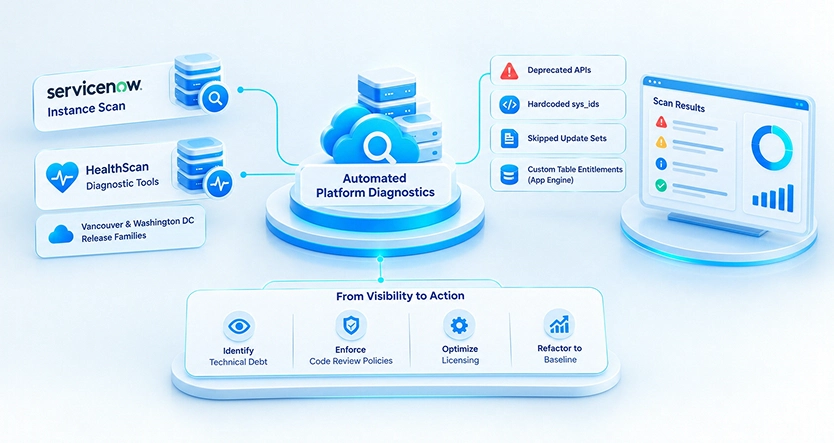
In early deployment stages, enterprise teams prioritized rapid go-lives by relying heavily on custom JavaScript, custom tables, and modified global business rules. Organizations frequently granted broad "Fulfiller" access roles to casual internal users. This initial speed created hidden structural liabilities. Unregulated custom table creation triggered unexpected licensing tier upgrades, while modified out-of-the-box (OOB) scripts created upgrade blockers, forcing platform teams into manual release remediations.
Aligning rapid deployment with long-term governance is vital for initial platform momentum. In our view, executive sponsors frequently misjudge early custom builds as permanent solutions, creating a compounding budget deficit when custom workflows break during routine family upgrades.The Shift Toward Automated Platform Diagnostics
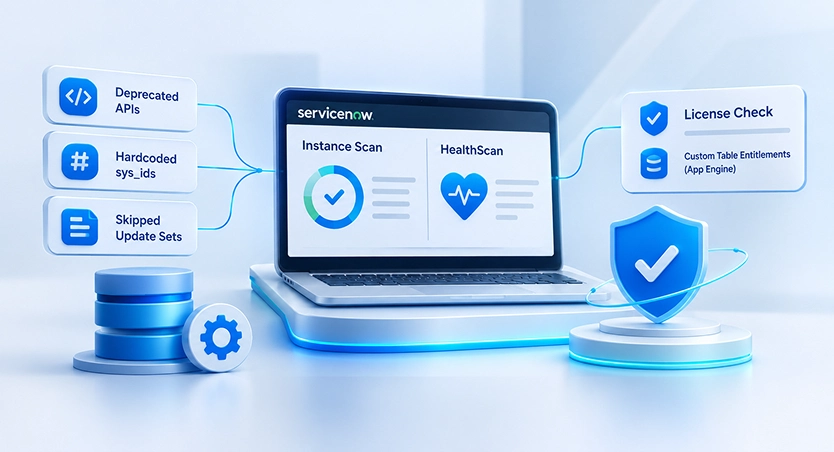
As platform upgrade friction mounted, ServiceNow introduced Instance Scan alongside formalized HealthScan diagnostic tools within the Vancouver and Washington DC release families. According to the ServiceNow Technical Debt Guide, these tools allowed administrators to automatically flag deprecated APIs, hardcoded sys_ids, and skipped update sets during upgrades. Simultaneously, licensing rules tightened around custom table entitlements in App Engine. Organizations began realizing that maintaining legacy code cost significantly more than refactoring back to baseline platform capabilities.
Utilizing native health scans provides essential visibility into technical debt. In our view, administrators often treat diagnostic scan outputs as simple developer checklists rather than using the data to enforce strict code-review policies across delivery teams.The Reality of Modern License and Code Maintenance
Organizations inherit existing license structures where unused Fulfiller roles and orphan custom tables incur continuous subscription costs. As explained in the ServiceNow Licensing Guide, unmonitored role allocations directly inflate licensing fees. Furthermore, ServiceNow’s Technical Debt Guidance emphasizes that technical debt is an ongoing operational tax rather than a one-time cleanup project.
TopTech's Take (Strategic): Modern releases offer powerful baseline capabilities that eliminate the need for custom scripts. In our view, C-suite leaders who fail to align platform license entitlements with actual user activity risk overpaying for fulfillment seats while starving strategic automation initiatives.The Four-Step Remediation Plan
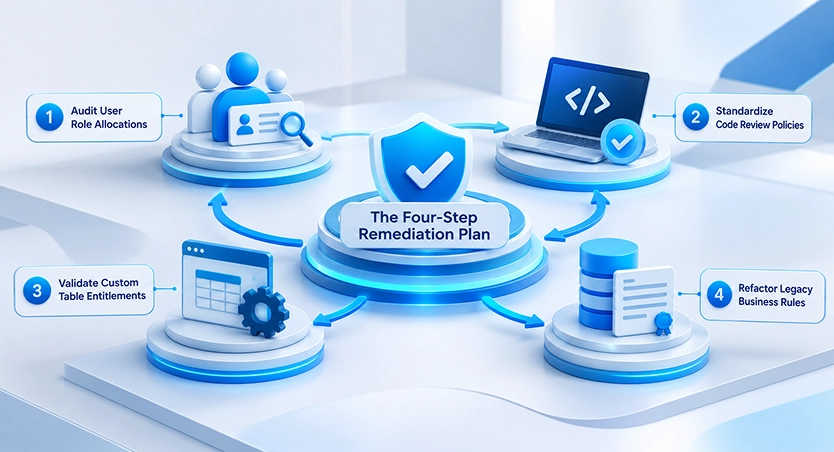
Remediating platform sprawl requires disciplined execution across four structured steps:
- Audit User Role Allocations: The Platform Admin must run user-activity reports to identify inactive Fulfillers and downgrade casual users to Requester roles.
- Standardize Code Review Policies: The Lead Architect must establish mandatory update-set checks using Instance Scan before promoting custom code to production.
- Validate Custom Table Entitlements: The IT Financial Manager must inventory all custom tables against current App Engine licensing thresholds.
- Refactor Legacy Business Rules: The Development Lead must replace custom JavaScript logic with OOB Flow Designer actions and baseline configuration tables.Systematic remediation restores instance stability and optimizes license expenditure. In our view, organizations that attempt large-scale code refactoring without automated test coverage risk breaking active business workflows during production cutover.
The Horizon of Predictive Governance
Our inference: ServiceNow governance will shift toward real-time, AI-driven code refactoring and predictive license optimization. Future platform releases will likely analyze workflow execution logs in real time, automatically recommending where custom scripts can be converted into baseline actions while dynamically flagging misallocated license entitlements before annual subscription renewals.
Accelerate Platform Optimization with TopTech
Addressing technical debt and licensing sprawl requires deep technical expertise, disciplined governance, and precise execution.
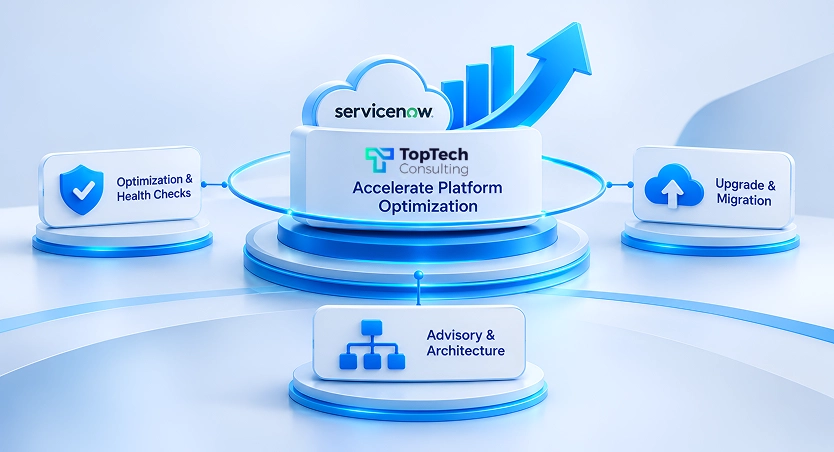
TopTech's certified ServiceNow experts deliver end-to-end Optimization & Health Checks, Upgrade & Migration management, and Advisory & Architecture services. We perform thorough health scans, optimize system performance, and align platform configuration with out-of-the-box best practices to minimize over-customization and maximize ROI.Partner with our team to streamline your instance and eliminate platform sprawl: Explore TopTech ServiceNow Services .