







Machine Identity Console: Securing Non-Human Accounts and API Integrations
In the modern enterprise landscape, human employees are no longer the primary entities accessing cloud platforms. Non-human identities ranging from automated scripts and service accounts to background processes and third-party software integrations frequently outnumber human users in enterprise software environments. While these automated connections drive business workflows, they also introduce significant security risks when left unmonitored. The Machine Identity Console provides security teams, system administrators, and platform architects with a centralized workspace to discover, evaluate, and secure every non-human account interacting with their instances.
At TopTech, we analyze how modern identity governance frameworks safeguard enterprise architectures. In this guide, we break down what the Machine Identity Console delivers, how it evaluates non-human risk, and how your team can leverage its governance workflow to eliminate hidden vulnerabilities across inbound API integrations.What Is the Machine Identity Console?
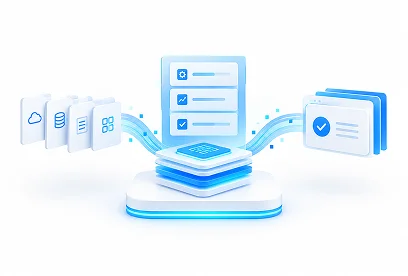
The Machine Identity Console is a security workspace designed to bring visibility and governance to non-human identities accessing instance resources. Historically, tracking service accounts used for inbound data integrations required navigating fragmented log tables, reviewing custom access control lists, or running manual database queries. The console unifies these security oversight tasks into a single dashboard, mapping account privileges, evaluating authentication protocols, and auditing API execution patterns in real time.
By consolidating non-human access management into a dedicated interface, the console bridges the gap between enterprise identity governance and technical integration management.Human Identity Governance vs. Machine Identity Oversight:
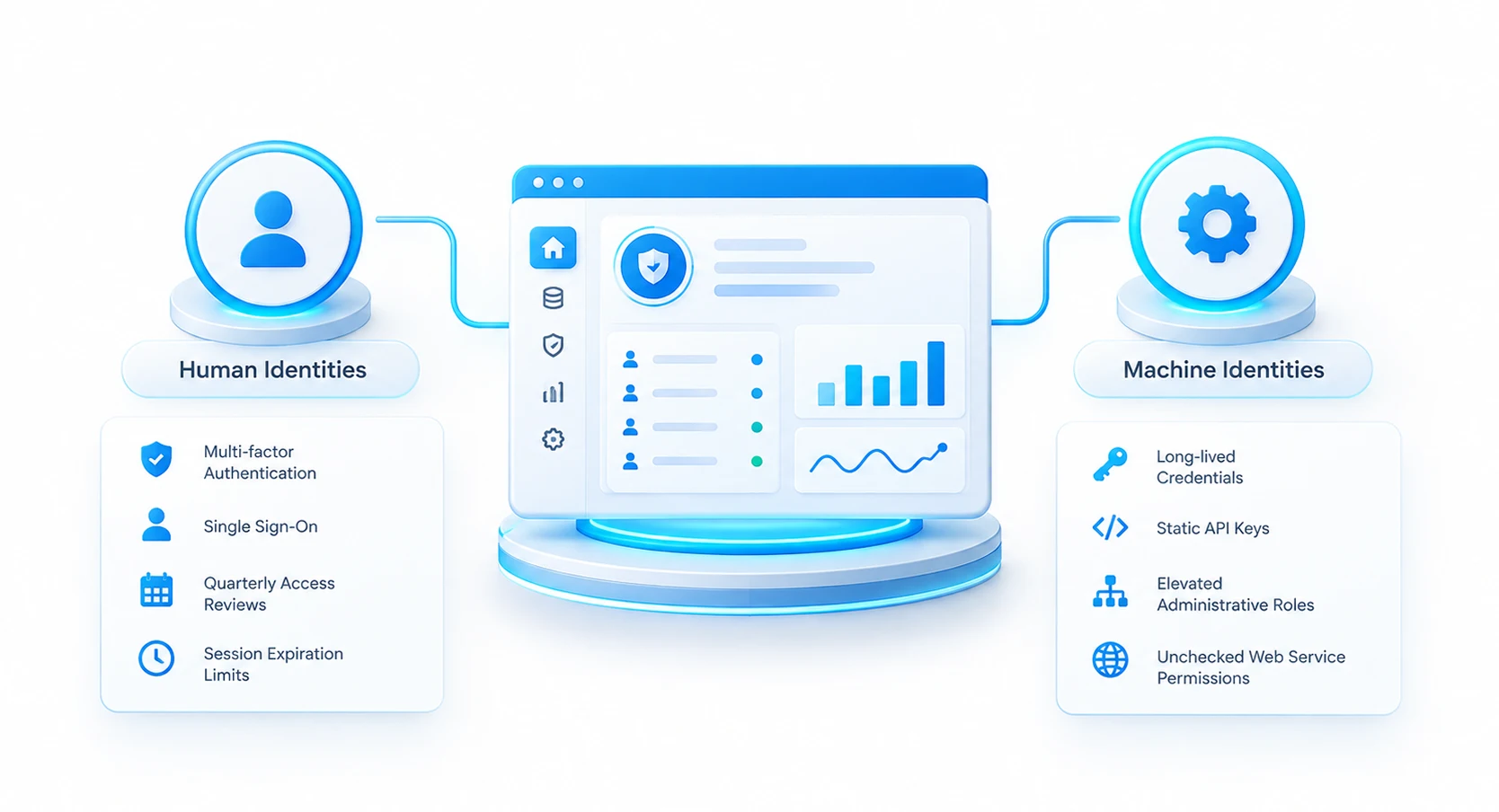
- Human Identities: Protected using multi-factor authentication, single sign-on, quarterly access reviews, and strict session expiration limits.
- Machine Identities: Often granted long-lived credentials, static API keys, elevated administrative roles, or unchecked web service permissions that persist without regular rotation.
The 3-Step Governance Lifecycle for Non-Human Accounts
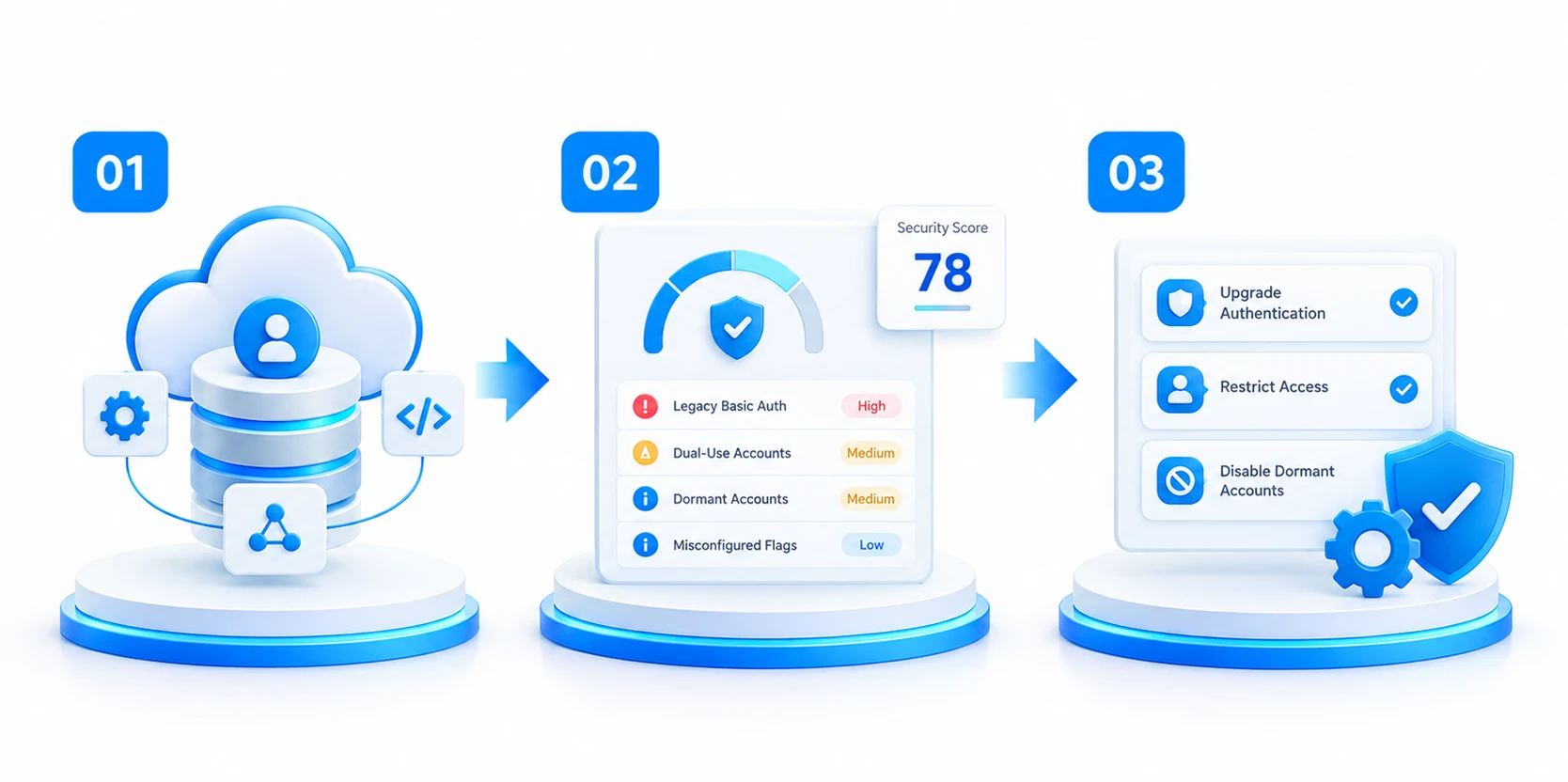
Securing non-human access requires moving beyond reactive troubleshooting. The Machine Identity Console structures non-human account governance into three clear operational phases:
Automated Discovery of Non-Human Accounts: The console continuously scans the platform ecosystem to catalog service accounts and inbound API integration endpoints. It automatically flags accounts marked for web service access, as well as any account executing API calls across the system. This gives security leads a complete inventory of active non-human accounts without requiring manual data tagging.Contextual Risk Assessment and Security Scoring: Once non-human entities are identified, the console evaluates their configuration settings against security benchmarks to generate a consolidated Machine Identity Security Score. The platform highlights specific risk categories, including:- Legacy Basic Authentication: Accounts relying on unencrypted username-and-password pairs rather than modern OAuth tokens.
- Dual-Use Accounts: Accounts configured for both interactive user logins and automated API access, which increases attack surfaces.
- Dormant Integration Accounts: Inactive service accounts that have not logged an API call in 100 days or more, leaving forgotten entry points open to exploitation.
- Misconfigured Access Flags: Integration accounts operating with web service access disabled, creating unexpected integration failures.
Guided Remediation and Policy Enforcement: Visibility alone does not stop security breaches; targeted action does. The console provides step-by-step remediation guidance directly linked to detected risks. Administrators can upgrade insecure basic authentication flows to modern token standards, restrict accounts exclusively to web service execution, and disable dormant accounts with minimal manual overhead.
Strategic Value: Why Non-Human Account Governance Matters for the C-Suite
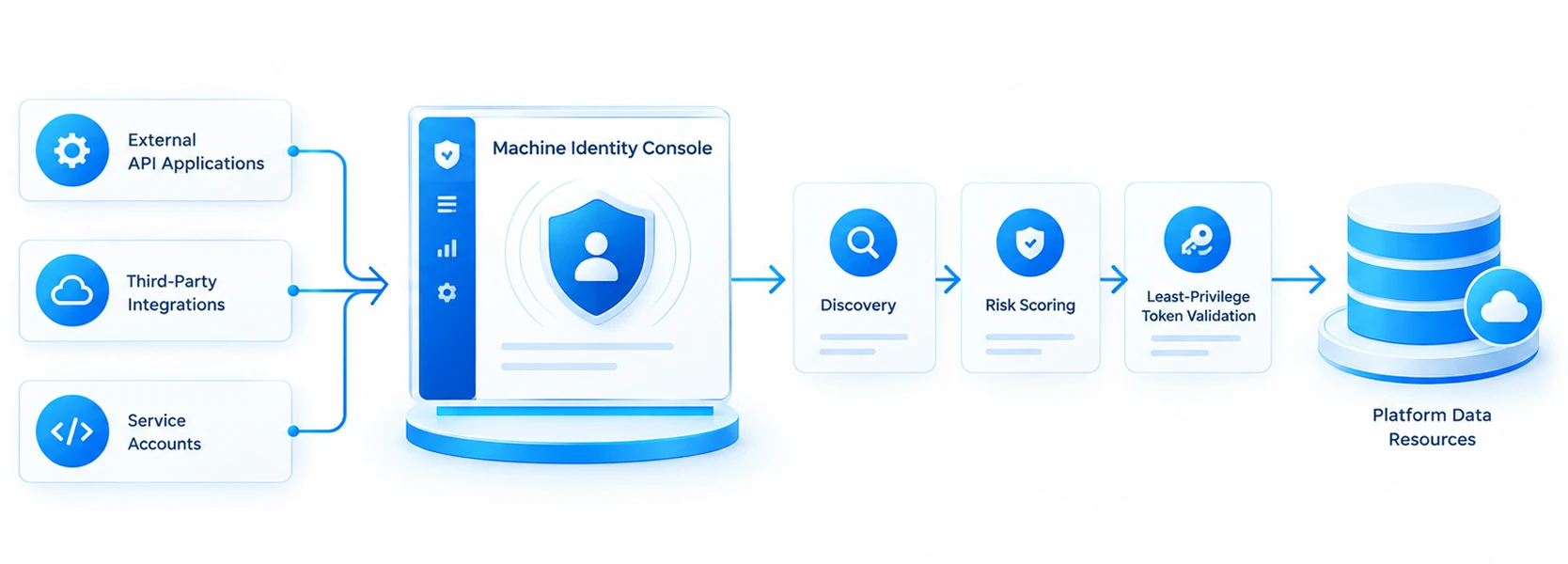
Managing machine identities is a core component of zero-trust architecture. Deploying the Machine Identity Console provides three primary organizational benefits:
Hardening API Integration Points
Third-party integrations represent critical communication channels for enterprise operations. By enforcing modern authentication mechanisms like OAuth token grants and third-party OIDC tokens, security teams eliminate plaintext password transmission across public networks.Enforcing the Principle of Least Privilege
Non-human accounts are frequently granted overly broad administrative privileges during initial testing and then left unadjusted in production environments. The console maps the precise API resources each service account touches over 7-day rolling windows, allowing administrators to restrict access scopes exclusively to required data fields.Streamlining Zero-Trust Compliance Audits
Demonstrating regulatory compliance for frameworks like SOC 2, ISO 27001, or NIST requires proving that all system access human and non-human is audited and governed. The console provides exportable activity metrics, visual risk trends, and credential tracking, simplifying compliance reporting for internal and external auditors.4 Best Practices for Deploying the Machine Identity Console
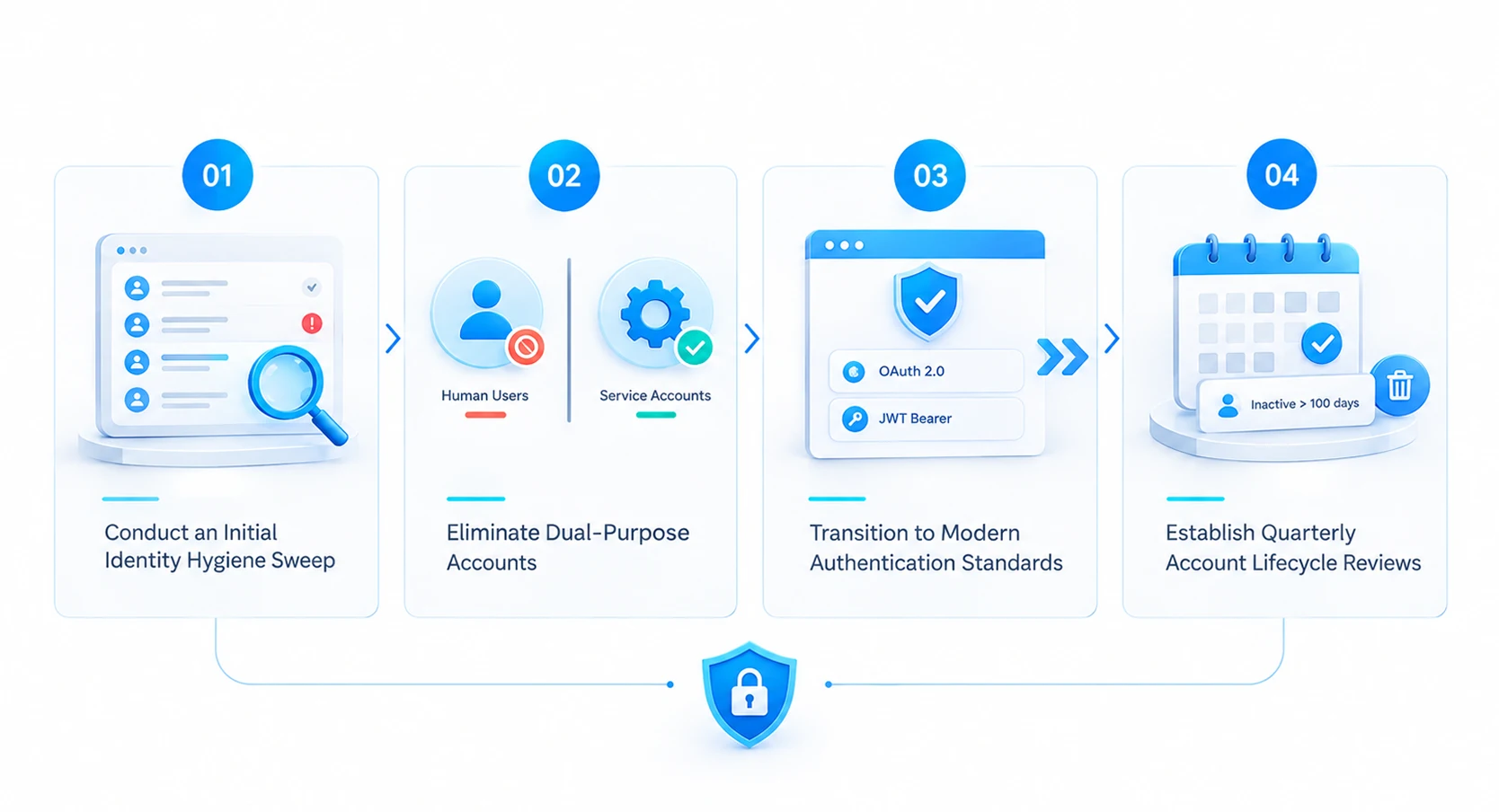
To extract maximum value from your identity governance implementation, we recommend following this four-step adoption blueprint:
- Conduct an Initial Identity Hygiene Sweep: Use the console's discovery view to catalog all active service accounts and flag those using legacy basic authentication.
- Eliminate Dual-Purpose Accounts: Enforce strict separation between human users and service accounts by restricting non-human identities exclusively to API access paths.
- Transition to Modern Authentication Standards: Migrate legacy basic authentication integrations to OAuth 2.0 or JWT Bearer grants directly within the guided setup workflows.
- Establish Quarterly Account Lifecycle Reviews: Review accounts flagged with no activity over 100 days to deactivate unnecessary access points and keep database schemas clean.
Key Takeaways
- Centralized Governance: The Machine Identity Console offers a unified command center to discover, monitor, and secure non-human accounts and inbound API integrations.
- Proactive Risk Scoring: Calculates a real-time Machine Identity Security Score based on dormant status, authentication protocols, and permission configurations.
- Modern Credential Enforcement: Streamlines the transition away from insecure basic authentication toward robust OAuth and JWT token standards.
- Zero-Trust Alignment: Enforces least-privilege access and isolates API activity from human interactive sessions.
Secure Your Enterprise Architecture with TopTech
Protecting modern enterprise platforms against identity-based vulnerabilities requires strategic oversight, deep technical knowledge, and proactive governance. At TopTech, our certified security consultants and platform leads help enterprise organizations configure identity controls, eliminate technical debt, and build resilient integration pipelines.
Ready to strengthen your non-human identity governance? Contact our platform security specialists today to schedule an architecture and API security review.