





ServiceNow Autonomous Workforce AI Specialists: The Next Evolution in Enterprise Automation
The enterprise landscape is witnessing a fundamental shift in how work gets done. Generative AI has evolved from a passive assistant that drafts text into an active, decision-making engine capable of executing end-to-end business operations. With the launch of ServiceNow autonomous workforce AI specialists strengthened by strategic platform expansions including Moveworks technology organizations are transitioning from simple chat interfaces to fully orchestrated digital workforces.
At TopTech, we analyze how these platform innovations redefine operational productivity. In this guide, we break down what autonomous AI specialists actually do, how they differ from general-purpose agents, and how enterprise leads can deploy them securely across IT, HR, and customer service operations.What Are ServiceNow Autonomous Workforce AI Specialists?
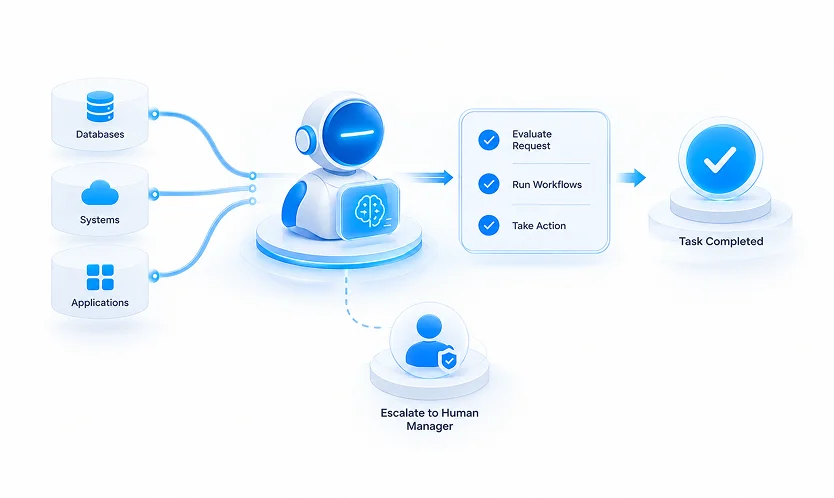
ServiceNow autonomous workforce AI specialists represent domain-specific digital workers trained to think, reason, and take action within targeted business areas. Unlike basic conversational chatbots that rely on pre-programmed scripts, these AI specialists evaluate incoming requests, consult relevant databases, determine the correct sequence of actions, and execute complex workflows directly within the Now Platform.
By combining deep domain context with natural language understanding, autonomous specialists act as digital extension teams handling routine operational tasks while escalating nuanced edge cases to human managers.Evolution from Passive Assistants to Autonomous Workforces:
- First-Gen Generative AI: Summarizes records, answers basic questions, and generates text drafts that still require manual human execution.
- Autonomous Workforce AI Specialists: Understands business intent, queries multi-system records, runs cross-platform workflows, and completes tasks independently without manual intervention.
4 Core Capabilities Driving the Autonomous AI Workforce
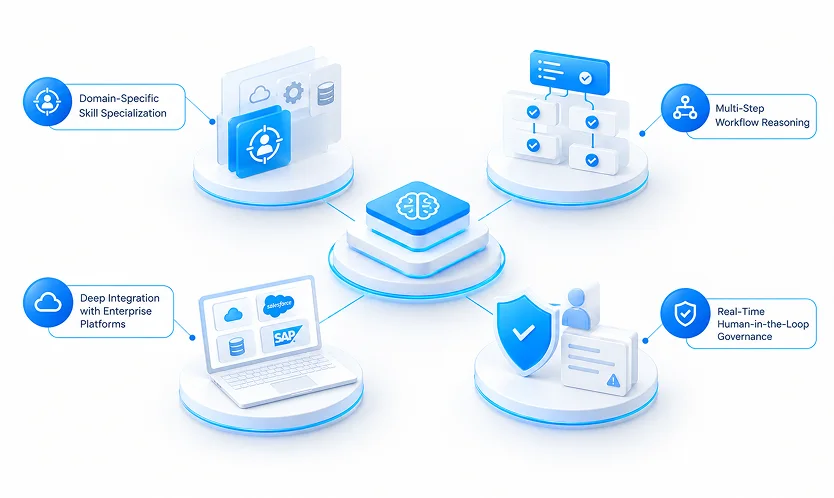
To understand how autonomous specialists operate at scale, enterprise architects should look at the key technical frameworks that power their reasoning and execution capabilities:
- Domain-Specific Skill Specialization: Rather than using a one-size-fits-all model, AI specialists are purpose-built for distinct functions such as IT service desk triage, HR policy fulfillment, or procurement approvals ensuring high precision and contextual accuracy.
- Multi-Step Workflow Reasoning: Specialists break down complex user requests into logical sub-tasks. For example, when an employee requests a device upgrade, the AI specialist verifies eligibility, checks inventory levels, submits budget approvals, and creates fulfillment tasks automatically.
- Deep Integration with Enterprise Platforms: Powered by expanded conversational search and natural language capabilities (including Moveworks integration assets), specialists search across legacy databases, knowledge bases, and third-party SaaS tools to resolve issues without data siloing.
- Real-Time Human-in-the-Loop Governance: Built-in platform safety guardrails allow organizations to set strict boundary conditions. If a task exceeds predefined risk thresholds or confidence scores, the specialist seamlessly routes the case to a human agent with full context.
Standard AI Assistants vs. Autonomous AI Specialists: Architectural Differences
Understanding the functional boundary between standard AI assistants and autonomous specialists is critical for IT budgeting and resource planning.
- Operational Scope & Driving Force: Standard AI assistants focus primarily on task drafting, content summarization, and simple information retrieval. In contrast, autonomous AI specialists take charge of end-to-end process execution and independent decision-making.
- Depth of User Interaction: Legacy assistants handle single-turn Q&A chat interactions. Autonomous specialists execute multi-step reasoning models, dynamically routing workflows across multiple systems based on live conditions.
- System Permissions & Access: Standard assistants operate with read-only access to basic knowledge bases to pull reference material. Autonomous specialists hold secure read-and-write permissions across core enterprise platform layers to modify records, update statuses, and submit actions.
- Human Involvement & Oversight: Standard assistants rely heavily on human intervention to take raw outputs and manually execute recommendations. Autonomous specialists perform tasks independently, bringing human team members into the loop only to approve high-risk exceptions or edge cases.
Strategic Value: Why Autonomous Digital Workforces Matter for the C-Suite
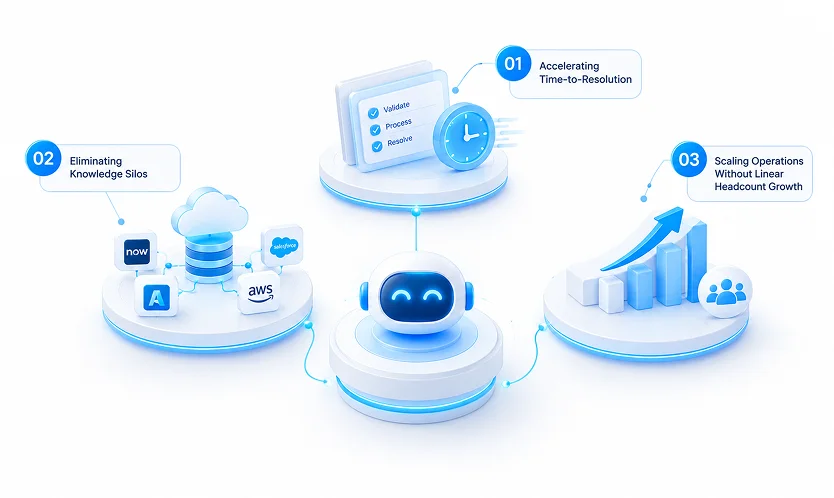
Deploying an autonomous workforce is not merely an IT upgrade; it is a fundamental shift in business unit economics. The ServiceNow autonomous workforce AI specialists architecture delivers three core strategic advantages:
Accelerating Time-to-Resolution
Traditional service requests often sit in queues waiting for human triage. AI specialists process requests instantly, running validation checks and executing back-end tasks in parallel. This drastically reduces mean time to resolution (MTTR) across IT and HR support operations.Eliminating Knowledge Silos
By unifying search and reasoning across disparate cloud tools, specialists give employees a single entry point for support. Employees no longer need to know which department handles a specific request; the AI specialist identifies the underlying issue and routes it through the correct system behind the scenes.Scaling Operations Without Linear Headcount Growth
As enterprise request volumes surge, organizations can scale ticket throughput without forcing operational teams into burnout. Human employees shift their focus from manual data entry to strategic, high-value problem-solving, while digital specialists manage high-volume, repetitive workloads.4 Steps to Prepare Your Enterprise for Autonomous AI Specialists
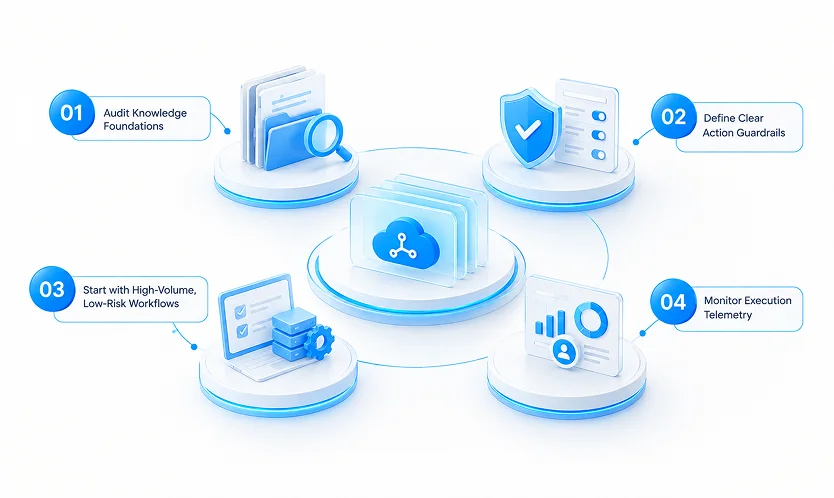
Implementing autonomous agents requires clear governance and structured data foundations. At TopTech, we recommend following this four-step adoption strategy:
- Audit Knowledge Foundations: Clean up, update, and index your internal knowledge bases and service catalogs. AI specialists rely on accurate, structured documentation to make correct operational decisions.
- Define Clear Action Guardrails: Establish precise authorization boundaries specifying which actions specialists can take autonomously and which require human managerial sign-off.
- Start with High-Volume, Low-Risk Workflows: Deploy your first AI specialists to handle routine scenarios such as software access requests or benefit inquiries before expanding to complex financial or infrastructure workflows.
- Monitor Execution Telemetry: Continuously track task completion rates, user sentiment, and escalation patterns within the Now Platform dashboard to refine agent performance over time.
Key Takeaways
- Next-Gen Automation: ServiceNow autonomous workforce AI specialists move beyond simple chat responses to reason, decide, and execute complex business workflows independently.
- Enhanced Capabilities: Strategic platform additions including Moveworks integration strengthen natural language search and cross-system task execution across enterprise silos.
- Domain Precision: Purpose-built AI specialists excel at specialized IT, HR, and service operations rather than relying on generic, broad-brush AI models.
- Governed Execution: Robust human-in-the-loop guardrails ensure high-risk decisions are routed to human teams with full contextual summaries.
Modernize Your Digital Workforce Strategy with TopTech
Transitioning from basic generative AI tools to a fully orchestrated autonomous digital workforce requires robust architecture, strategic data alignment, and strict governance. At TopTech, our certified ServiceNow consultants help enterprise organizations design, deploy, and scale intelligent workflows that deliver measurable operational efficiency.
Ready to explore the power of an autonomous workforce? Contact our platform leads today to schedule a detailed AI readiness assessment.