






Stop Preparing for Audits: How Continuous Cyber Ops Makes Compliance Obsolete
Static compliance audits create a false sense of security, forcing enterprise leaders to shift toward continuous cyber operations where control authorization and threat remediation happen dynamically in real time.
For years, regulatory compliance was treated as an annual exercisea stressful rush to collect evidence, populate spreadsheets, and satisfy external auditors. But when threat environments change by the hour, a compliance certificate granted six months ago offers zero protection against today’s vulnerabilities. Modern enterprise platforms are evolving to bridge the gap between audit requirements and active defence.Point-in-Time Compliance
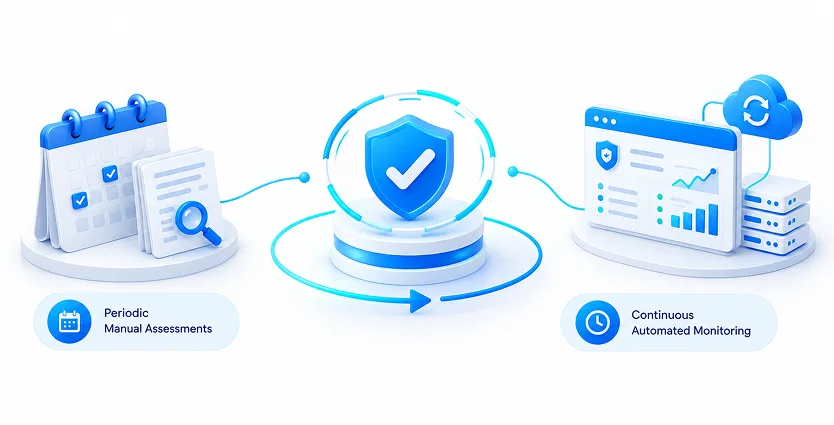
Historically, organizations operated in a reactive posture, performing manual control assessments once or twice a year. This approach created massive visibility gaps where non-compliant configurations remained undetected for months.
As analyzed in the ServiceNow Workflow Article, enterprises and government agencies are actively abandoning this periodic model. Modern risk operations require automating foundational governance capabilities to maintain pace with operational change.Enterprise teams must "close the vulnerability gap" by integrating risk assessment into daily operational workflows.Periodic audits are fundamentally obsolete. However, shifting to continuous operations requires breaking down longstanding cultural silos between enterprise risk officers and frontline IT administrators.Continuous Authorization & Monitoring
To eliminate audit lag, modern platform architectures introduce automated controls testing and standardized evidence generation directly inside operational workspaces.
According to the ServiceNow Continuous Authorization and Monitoring Architecture, automating Risk Management Framework (RMF) processes enables organizations to continuously evaluate authorization packages, manage Plan of Action and Milestones (POA&M) tasks, and export structured evidence via OSCAL protocols.Automated RMF processes allow decision-makers to "gain a real-time view of risk" across all enterprise environments.Real-time visibility is vital for Platform Admins. Yet, technology alone cannot fix underlying data hygiene. If Configuration Management Databases (CMDBs) contain stale telemetry, automated monitoring will simply output automated false alarms.Agentic Control Verification
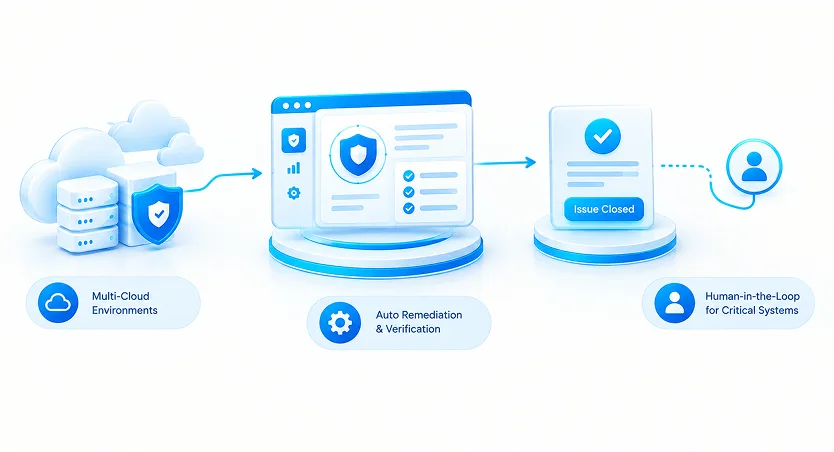
The leading edge of cyber operations moves beyond simple monitoring toward self-healing governance, where intelligent indicators continuously evaluate security controls across multi-cloud environments.
When a failure occurs, ServiceNow generates a remediation task; once the fix is applied, the system verifies compliance and automatically closes the issue.Auto-closing remediated issues is a huge productivity win. However, guardrails are essential: mission-critical infrastructure still requires human-in-the-loop review before automated policy closures take effect.Most organizations treat compliance and cyber operations as two distinct disciplines. In reality, regulatory compliance should never be an explicit destination, it should be an effortless byproduct of clean operational workflows. When security controls are natively embedded into daily IT service delivery, audit readiness occurs continuously and automatically.