






How to Unify IT and OT Governance to Cut Industrial Downtime and Security Risk
To secure and scale industrial operations, IT/OT convergence must evolve from basic asset visibility to dynamic, contextual network mapping within a unified workspace.
In the past, Information Technology (IT) and Operational Technology (OT) teams operated in completely different universes. IT managed servers and cloud infrastructure, prioritizing data confidentiality. Meanwhile, OT managed physical plant floors and manufacturing robotics, where the sole priority was physical safety and production uptime. Connecting these worlds used to mean messy spreadsheet handoffs. Today, modern platform management demands a single pane of glass.With the latest Operational Technology Management capabilities from ServiceNow, we can map out exactly how this convergence is happening. This Field Guide breaks down the platform updates by where you sit in the organization, helping you cut through the noise and apply these capabilities to your specific industry realities.The Foundational Vision
For business leaders just stepping into the industrial modernization space, the first hurdle is simply knowing what exists on the plant floor. You cannot secure or manage what you cannot see.
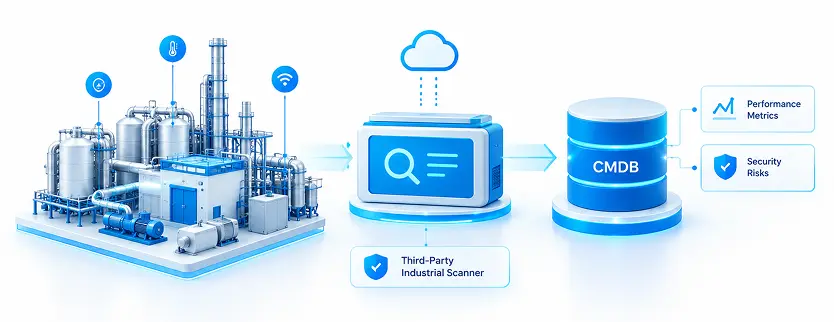
In Operational Technology Management the core methodology begins with comprehensive asset identification. The platform focuses on sweeping the industrial environment to locate machinery, sensors, and legacy systems. Once identified, these endpoints are fed into a centralized Configuration Management Database (CMDB) to track performance metrics and assess physical security risks.The solution ultimately "helps industrial organizations oversee and secure their physical assets." Automated discovery is the non-negotiable first step for transformation. It glosses over a critical operational reality: ServiceNow does not natively scan air-gapped industrial networks out of the box. Organizations must first invest in third-party passive industrial scanners before ServiceNow can ingest and orchestrate the data.Bridging the Purdue Model Divide
Security architects and OT veterans are naturally sceptical of enterprise IT tools creeping onto the plant floor. A standard IT vulnerability scan can inadvertently knock a programmable logic controller (PLC) offline, halting a multi-million-dollar production line.
The Yokohama and Brazil Release directly address these architectural concerns. The release highlights the ability to categorise all discovered OT devices by their specific Purdue Model levels, a standard industrial framework that separates enterprise networks from physical control zones.The update allows teams to "aggregate Operational Technology (OT) device data from multiple sources" into a unified industrial schema.By speaking the language of plant engineers, ServiceNow bridges a massive cultural gap. However, sceptics are right to remain cautious about data hygiene. The documentation misses the sheer administrative effort required to maintain accurate mappings as devices are physically moved across zones during plant floor reconfigurations.Dynamic Network Mapping
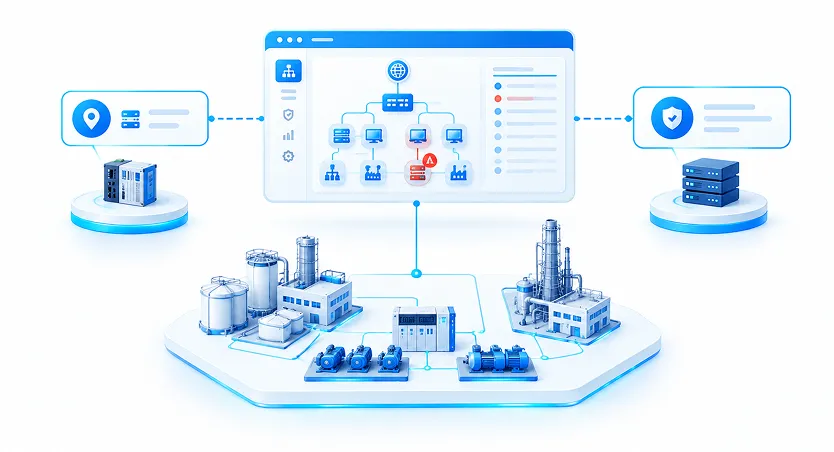
For the system administrators and incident responders actively managing the platform, static asset lists are no longer sufficient. When a vulnerability is detected on a human-machine interface (HMI), responders need to know exactly where that device sits in the physical network topology.
Australia/Zurich 2026 OT Manager has introduced advanced visual network mapping directly within the Industrial Workspace. Practitioners can now visually trace connections across specific subnets, identifying how a compromised endpoint might pivot into a critical control system.Admins can visually "view a site, its subnets, and the OT devices" directly within the workspace.This visual mapping is the most actionable update for frontline practitioners, vastly reducing the mean time to remediate (MTTR) during active security incidents. What remains unresolved is the availability of automated remediation playbooks. While the system provides excellent context, practitioners still lack automated patch deployment capabilities for legacy endpoints that cannot tolerate standard update cycles.Standardising "Criticality"
Historically, IT and OT have held conflicting definitions of risk. To IT, "criticality" means data confidentiality and server availability. To OT, "criticality" means physical human safety and uninterrupted manufacturing physics.
By merging these assets into a single, Purdue-aware CMDB, organisations are quietly forced to standardise the metric of "criticality" across both domains. For the first time, a Chief Information Security Officer and a Plant Manager can look at the same dashboard and agree that an unpatched server in Level 3 carries a higher enterprise risk than a segmented sensor in Level 1. That shared operational language, more than any software feature, is the true catalyst for industrial resilience.