







ServiceNow Pricing and Licensing Explained (2026 Guide)
Navigating enterprise software procurement can often feel like decoding a moving target, especially as autonomous AI capabilities transform platform structures. With recent portfolio shifts across the Now Platform, having ServiceNow pricing and licensing explained (2026 guide) becomes essential for IT leaders, procurement teams, and platform administrators looking to optimize software spend. At TopTech, we analyze these licensing models to help your enterprise align platform investments with operational value without overspending on unused seat tiers or compute tokens.
In this breakdown, we examine how ServiceNow structures its core product packages, how the introduction of native AI changes consumption models, and how to negotiate your enterprise contracts effectively.How ServiceNow Structures Enterprise Pricing
Unlike off-the-shelf SaaS products with fixed public price tags, ServiceNow customizes enterprise agreements based on organization size, chosen modules, and deployment scope. The overall cost model combines underlying platform usage, specific product packages (such as ITSM, CSM, or HRSD), and add-on capacity layers.
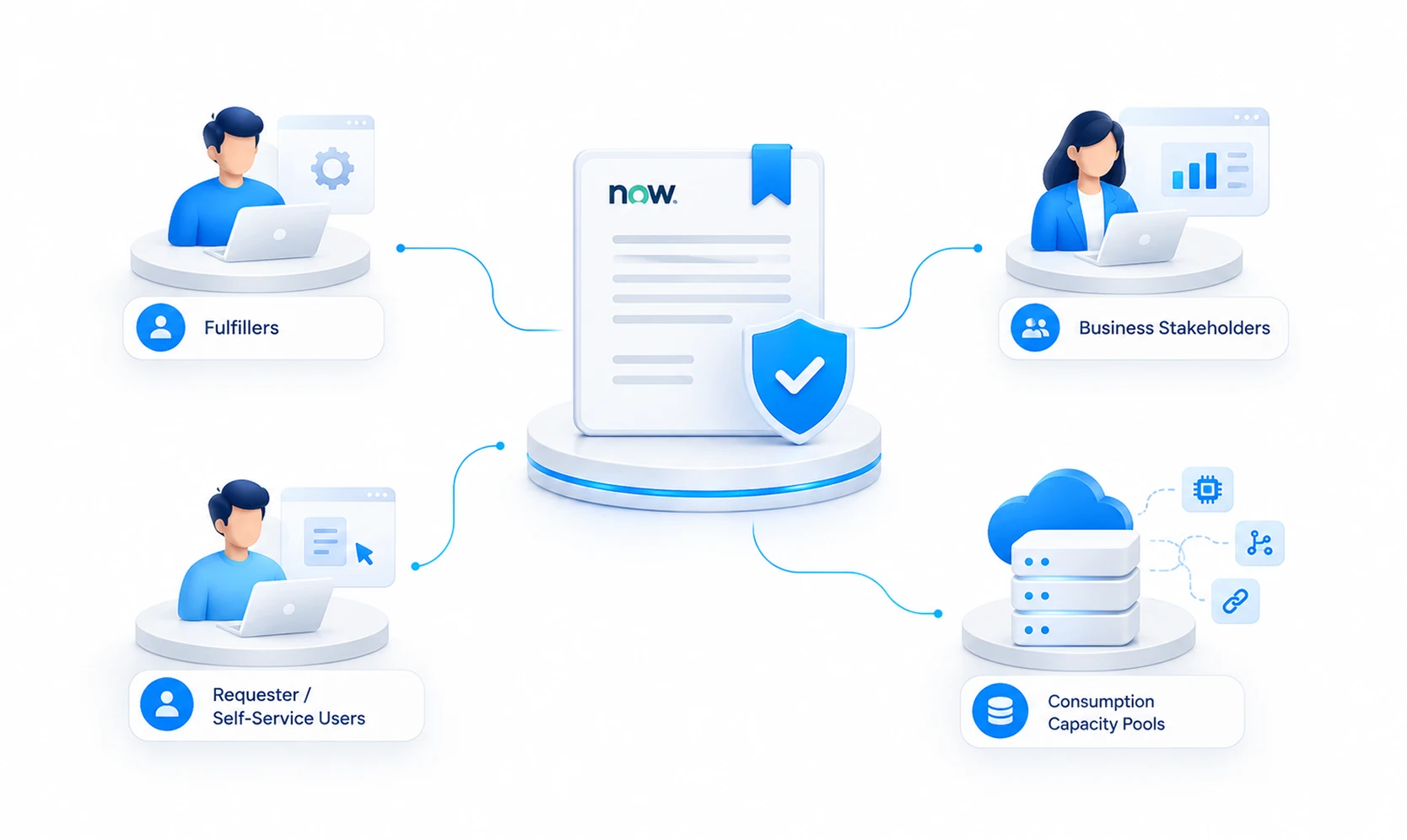
To evaluate total cost of ownership (TCO), enterprise buyers must understand the interaction between core user license types and capacity-based consumption meters.The Core Components of Your ServiceNow Contract:
- Fulfillers (Fulfiller Licenses): Full-access users who log in, manage workflows, update records, and resolve incidents daily across IT, HR, or Customer Service domains.
- Business Stakeholders: Read-only or light-approval users who require visibility into reporting dashboards and request approvals without full administrative privileges.
- Requester / Self-Service Users: General employees who access the Employee Center portal to submit tickets, check request statuses, and search knowledge bases (typically covered under site-wide platform licensing).
- Consumption Capacity Pools: Metered units for AI processing, automated workflow executions, and integration hub transactions that sit alongside seat-based licenses.
The 2026 Licensing Architecture: Foundation, Advanced, and Prime Tiers
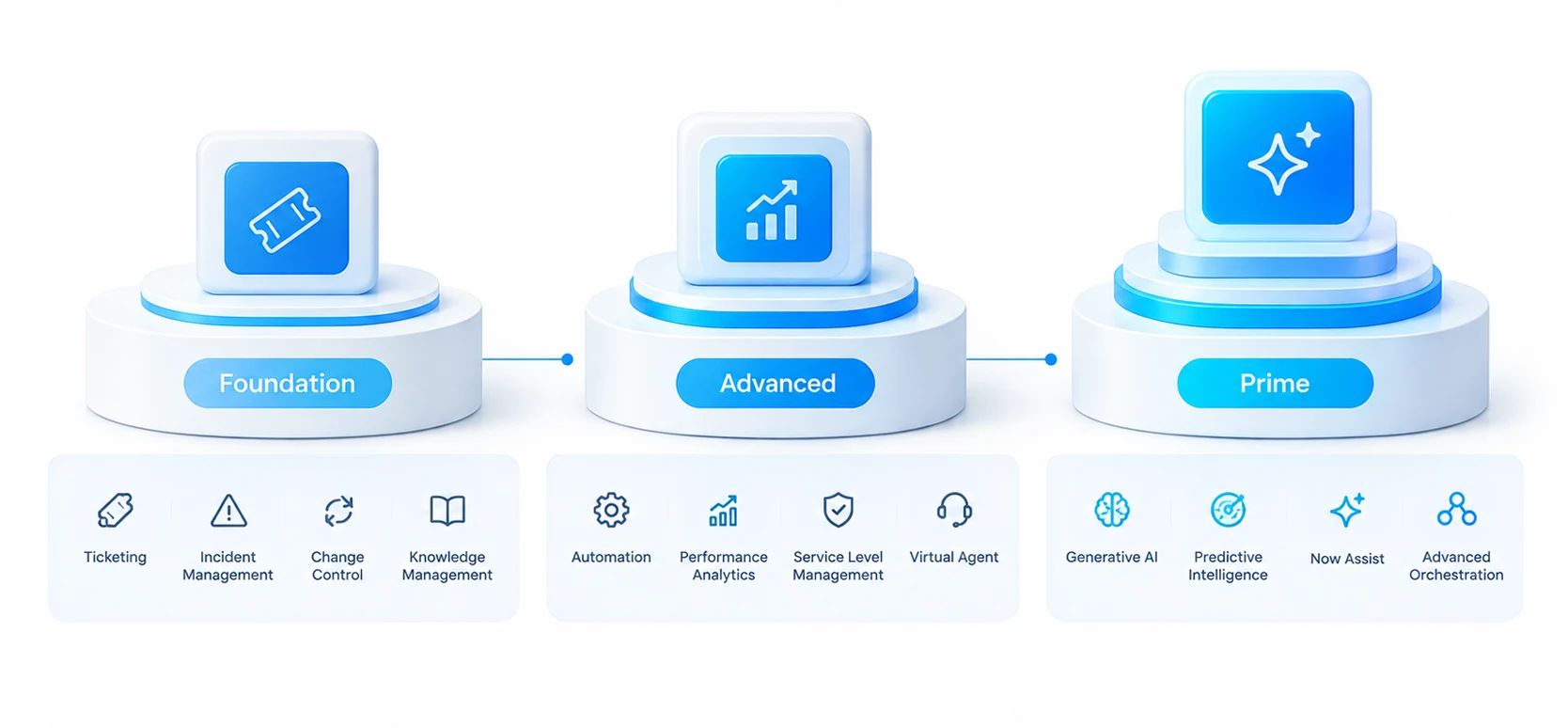
ServiceNow has streamlined its solution packaging into distinct tiers most visibly across IT Service Management (ITSM) and Customer Service Management (CSM). Understanding what each tier includes prevents purchasing higher-level packages for features your organization isn't ready to deploy.
- Foundation Tier: Standard operational baseline designed for core ticketing, incident management, change control, and basic knowledge management. Perfect for organizations establishing initial service management practices.
- Advanced Tier: Expands operational capabilities by incorporating advanced automation, performance analytics, service level management, and virtual agent capabilities to handle higher ticket volumes.
- Prime Tier: Built for hyper-automated enterprises. Integrates native generative AI tools, predictive intelligence, Now Assist capabilities, and advanced orchestration engines natively into the core workspace.
Decoding AI-Native Licensing: Now Assist and Token Consumption
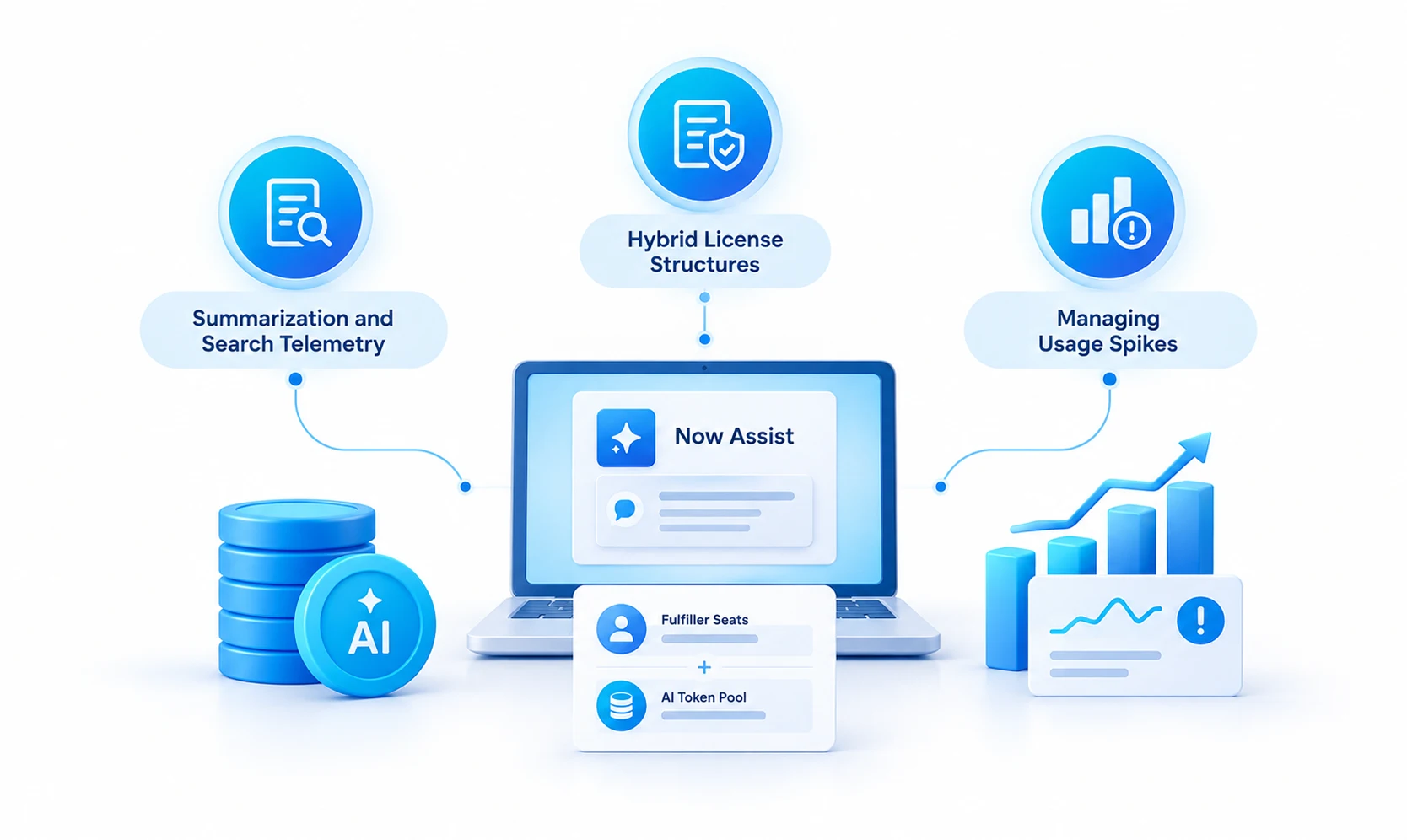
As generative AI and autonomous specialists become integral to enterprise workflows, licensing has evolved beyond standard headcount seats. The introduction of Now Assist brings a capacity-driven element to enterprise contracts.
Instead of charging a flat fee for every employee, AI features often draw from centralized capacity pools or dedicated token allotments.- Summarization and Search Telemetry: Every time Now Assist generates a ticket summary, drafts a resolution note, or searches knowledge bases via natural language, it consumes a unit of AI processing capacity.
- Hybrid License Structures: Enterprise agreements frequently pair baseline fulfiller seats (for human staff) with scalable AI token pools. This setup ensures you only pay for the volume of automated work your instance actually processes.
- Managing Usage Spikes: Organizations must monitor monthly AI consumption to prevent unexpected overage charges when ticket volumes spike during major infrastructure changes or seasonal peaks.
4 Cost-Optimization Strategies for Enterprise Procurement
Managing ServiceNow licensing effectively requires continuous oversight. At TopTech, we recommend these four practical steps to optimize license allocation and control contract expenses:
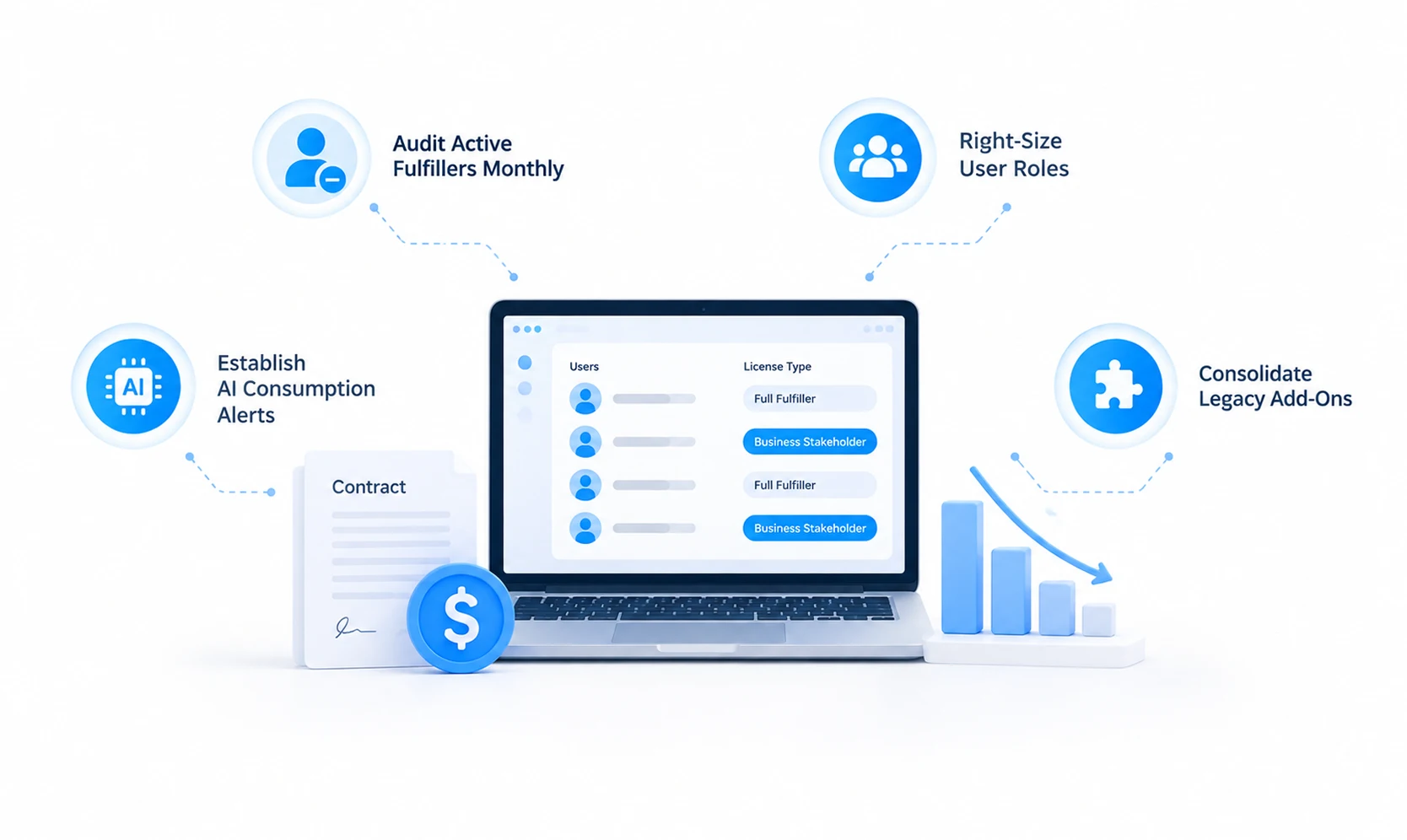
- Audit Active Fulfillers Monthly: Inactive or transferred employees often retain fulfiller licenses long after changing roles. Reclaiming unused licenses prevents unnecessary seat expansion during contract renewals.
- Right-Size User Roles: Ensure team members who only review reports or approve budget items hold Business Stakeholder licenses rather than expensive full-fulfiller seats.
- Establish AI Consumption Alerts: Set up automated alerts within your instance administration console to track Now Assist token usage and avoid end-of-quarter billing surprises.
- Consolidate Legacy Add-Ons: Review custom integrations and third-party utility applications; upgraded platform tiers often include built-in features that allow you to eliminate legacy add-on fees.
What you can take away from this?
- Tailored Frameworks: Having ServiceNow pricing and licensing explained (2026 guide) highlights how contracts combine fulfiller seats, stakeholder access, and consumption pools.
- Structured Tiers: Core products are packaged across Foundation, Advanced, and Prime tiers to match an organization's automation maturity level.
- AI Monetization Shift: Platforms like Now Assist use hybrid model capacity tokens, aligning costs directly with automated output volume.
- Proactive Governance: Regular license reclamation audits and user-role alignment prevent license bloat and lower annual renewal costs.
Maximize Your ServiceNow Investment with TopTech
Navigating enterprise software licensing while building a scalable IT architecture requires technical insight and procurement foresight. At TopTech, our certified ServiceNow architects and advisors help enterprise organizations audit instance usage, eliminate license bloat, and design cost-effective workflows.
Ready to optimize your ServiceNow contract and architecture? Contact our platform leads today to schedule a detailed licensing and instance health review.