






Stop Building AI Q&A Bots: Why Execution Is the Only AI Metric That Matters
Enterprise AI is transitioning from passive conversational Q&A to autonomous, cross-system execution grounded in enterprise data and governance.
For years, organizations treated enterprise AI as little more than an upgraded search box, a tool to summarize knowledge base articles or answer basic HR questions. Today, the conversation has fundamentally shifted. Leaders are no longer asking what AI can say, but what AI can do.Passive Knowledge
In the initial wave of adoption, AI showed up primarily as conversational interface layers designed to answer simple employee inquiries.
As highlighted in the Six Ways AI is Showing Up Knowledge session, industry leaders used early generative tools to streamline self-service and reduce service desk call volumes.Early AI deployment helped organizations "equip customers and employees with self-service" for basic requests.While self-service reduced immediate ticket volume, it created a ceiling. Point-solution bots answered questions but left employees to manually execute the actual work across disconnected portals.Unified Autonomous Execution
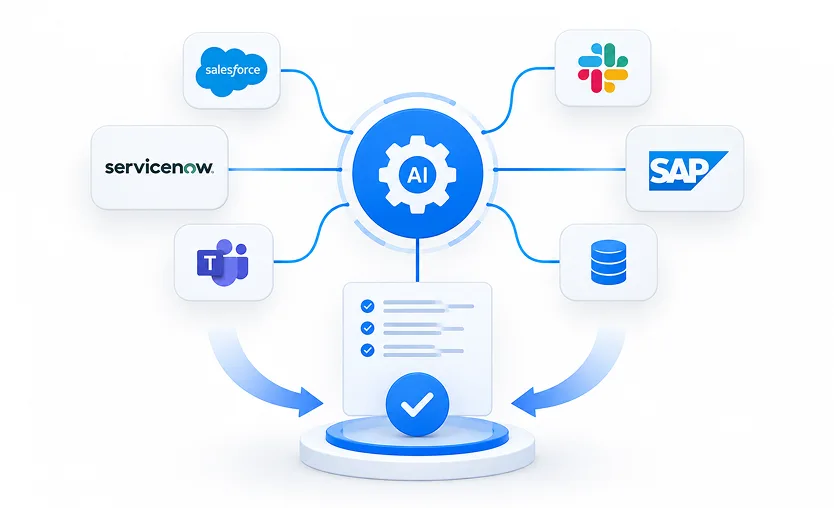
The modern enterprise requires AI that doesn't just route tickets, but completes complex, multi-system workflows end-to-end.
Architecture for ServiceNow Otto, conversational AI, enterprise search, and AI voice agents allows systems to execute requests across departments without switching tools.The unified experience is built to "handle requests to completion, across any department or system."Shifting from answering to executing is a huge leap forward. However, platform admins must ensure robust data access policies are in place so autonomous agents do not bypass organizational approval hierarchies.AI velocity is useless without structural governance. True autonomy occurs only when conversational agents are bound to enterprise permissions, audit trails, and central policy controls.