






The Timeline of Platform Justification: Evolving the ServiceNow Business Case
Enterprise ServiceNow business cases fail in capital allocation committees because they frame platform adoption as a tactical IT expense rather than an executive harness for operational resilience and value realization.
As C-suite executives, financial controllers, and Platform Admins evaluate funding proposals, technical feature lists often obscure core business objectives. To understand how enterprise investment proposals must adapt, the timeline illustrates the evolution of platform justification—from reactive cost-reduction pitches to real-time value realization.The Reactive Cost-Reduction Pitch
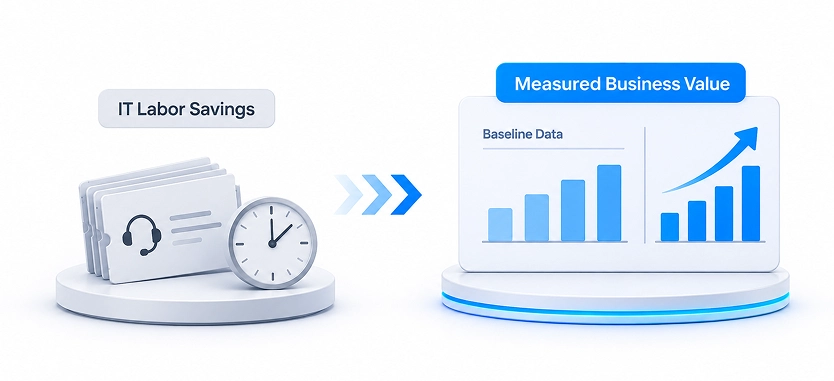
Historically, enterprise business cases focused almost entirely on tactical IT labor savings. Proposals attempted to justify platform investments by promising reduced ticket resolution times, eliminated manual tasks, and lower service desk headcount.
This narrow framing led to significant capital friction. Financial controllers viewed ServiceNow purely as a recurring software cost rather than a strategic asset. When platform teams presented business cases built on generic productivity estimates without baseline internal data, investment committees routinely rejected or delayed capital allocation.The Pivot: Top-Down Value Alignment and Resiliency Modeling
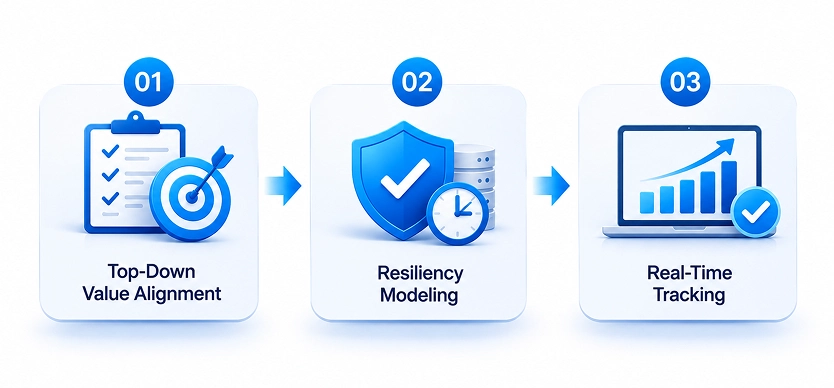
As platform architectures matured, the approach to business case development underwent a structural shift.
The introduction of the ServiceNow Business Case Success established a top-down methodology for investment proposals. The framework emphasizes that "the process of creating the business case is more important than the actual numbers" because it forces cross-functional stakeholders to agree on underlying operational inefficiencies before committing capital.Simultaneously, in Building the Business Case for Operational Resiliency, value models began quantifying the cost of business disruption—connecting real-time risk monitoring, automated incident response, and CMDB service mapping directly to outage prevention while "minimizing the likelihood, impact, and recovery time of disasters".Shifting from tactical cost-cutting to enterprise risk mitigation elevates platform proposals to executive priorities. However, many proposals falter by omitting explicit impact tolerance limits for core business services. Without predefined tolerance limits, risk reduction calculations remain theoretical to risk committees.A business case cannot remain a static document discarded after capital approval. Value metrics defined during initial discovery must be embedded directly into Strategic Portfolio Management (SPM) workspaces, establishing real-time tracking of actual operational returns against baseline business case assumptions.Stakeholder Socialization and Value Defense
Today, securing funding requires addressing the distinct governance criteria of every executive stakeholder.
ServiceNow Business Case Resource Center, constructing a CFO-ready business case requires multi-tier stakeholder alignment. Successful proposals address the specific mandates of finance, risk, and line-of-business executives while "building buy-in and enthusiasm among your key stakeholders".The Mechanics: Executing a CFO-Ready Proposal
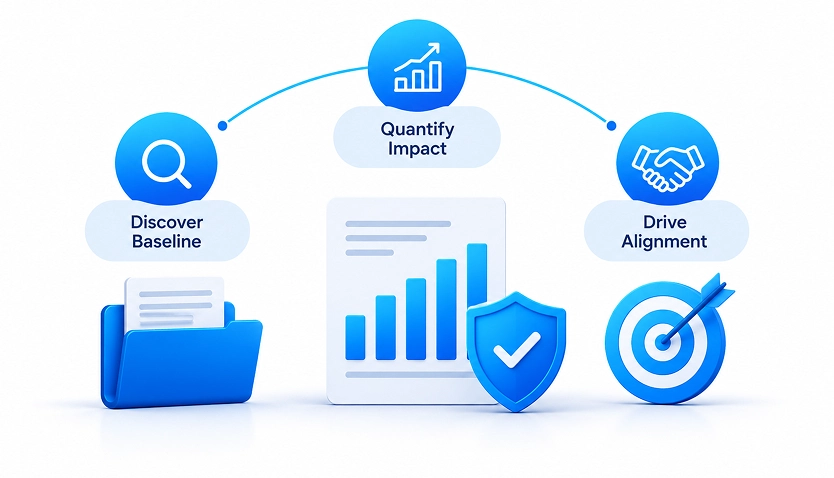
Building a defensible ServiceNow investment proposal requires disciplined execution. TopTech recommends a structured four-phase roadmap:
- Conduct Baseline Operational Discovery: Audit internal incident history, outage costs, and manual process overhead rather than relying on generic industry benchmarks.
- Quantify Risk and Resiliency Impact: Model the financial exposure of service downtime across critical business functions alongside traditional efficiency gains.
- Tailor Executive Business Messaging: Translate technical capabilities into strategic business outcomes aligned with corporate earnings goals.
- Establish Post-Approval SPM Governance: Embed value realization tracking into platform administration to prevent scope creep and monitor ROI.Platform teams frequently rush technical scoping while under-investing in stakeholder socialization. Without executive consensus on baseline metrics before submission, financial committees naturally default to viewing the proposal as discretionary spending.
Dynamic, Continuous Value Realization
Looking ahead, business case governance will evolve from a periodic funding exercise into continuous, automated value tracking.
In future platform maturity cycles, business cases will function as dynamic telemetry models. As workflows execute across the Now Platform, built-in process mining and value dashboards will continuously validate cost savings, risk reduction, and operational throughput against initial business case baselines in real time.Establishing this level of value transparency begins by structuring your business case around defensible operational metrics and executive alignment today.Build a Defensible Business Case with TopTech
Constructing a CFO-ready business case requires balancing technical architecture with financial rigor, risk modeling, and executive alignment.
The certified architects and advisory consultants at TopTech ServiceNow Services help enterprise organizations evaluate platform health, quantify baseline operational waste, and construct defensible investment strategies. From CMDB health remediation and process optimization to Strategic Portfolio Management alignment, TopTech delivers end-to-end advisory and technical execution.Partner with TopTech Consulting Services to articulate platform value, secure executive approval, and maximize your ServiceNow ROI.