








Headless Architect: How Decoupled Systems Accelerate Modern Salesforce Ecosystems
When digital enterprises reach a certain size, traditional monoliths begin to drag down market responsiveness. Marketing teams wait weeks for minor layout updates, while engineering teams spend sprints patching fragile presentation layers.
At TopTech, we view the emergence of the headless architect not as a temporary industry trend, but as an essential evolution in enterprise system design, especially for organizations leveraging Salesforce as their core engine.What Is a Headless Architect and Why Does Your Enterprise Need One?
A headless architect is an enterprise technology strategist who designs software systems by decoupling the front-end user experience (the "head") from the back-end data and business logic (the "body"). In a conventional setup, presentation templates and database rules are tightly coupled inside a single platform. If you alter the interface, you risk breaking core operational code.
By breaking this bond, a headless architect creates an API-driven ecosystem. Salesforce acts as the robust, secure engine managing customer data, inventory, logic, and workflows. Meanwhile, lightweight modern frameworks like React, Next.js, or Vue handle whatever digital storefront, mobile app, or portal your customer touches.Architecture Workflow
- Headless Front-End Interfaces: React Web Apps, Native iOS/Android builds, interactive kiosks, and conversational AI agents.
- API Abstraction Layer: REST and GraphQL protocols handling high-speed, secure data transport.
- Salesforce Core Engine: Manages Sales Cloud, Service Cloud, Data Cloud, and primary business rules.

Monolith vs. Headless Architecture: Structural Shift
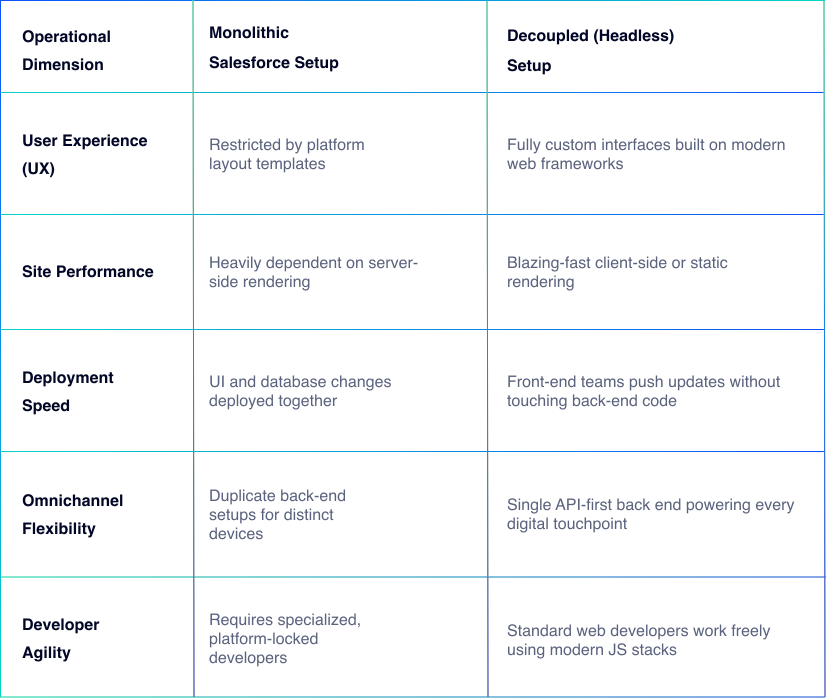
Understanding the role of a headless architect requires analyzing how decoupled systems outperform legacy, monolithic platforms across key operational dimensions.
4 Strategic Benefits of Hiring a Headless Architect for Salesforce
Decoupling your presentation layer is a structural shift, but the operational returns directly impact your bottom line.- Sub-Second Performance & Superior Core Web Vitals: Move page rendering to the edge to reduce load times significantly and cut user bounce rates.
- Complete Creative Freedom Across Touchpoints: Design unique, highly responsive interfaces without hitting standard template limitations.
- Unprecedented Omnichannel Scale: Deliver uniform, real-time CRM data to web apps, mobile builds, IoT hardware, and AI agents simultaneously.
- Insulated Enterprise Security & System Stability: Shield your back-end database from client-side UI bugs and vulnerability vectors.
1. Sub-Second Performance and Core Web Vitals
Page latency directly hurts revenue. Research shows that every single-second delay in page load time reduces conversions by up to 7%. A headless architect leverages modern edge rendering and Static Site Generation (SSG) to bypass server-side layout bottlenecks. By pulling content asynchronously via REST or GraphQL APIs, headless sites regularly report page load time reductions of 20% to 50%, keeping bounce rates low and Core Web Vitals scores in the green.2. Complete Design Freedom Without Platform Constraints
Standard Salesforce layouts are highly functional, but they can restrict hyper-custom user journeys. A decoupled framework allows product design teams to build custom visual interfaces without hacking Salesforce Visualforce or Lightning Web Component templates. The customer receives a bespoke brand experience, while Salesforce quietly executes the complex logic in the background.3. Native Omnichannel Scale
Modern buyers do not browse on laptops alone. They check orders on mobile apps, interact with smart displays, and communicate through AI-driven conversation agents. A headless architect configures your Salesforce instance into an API provider. This means a single update to product data, pricing rules, or customer profiles instantly reflects across every endpoint simultaneously, eliminating duplicated effort.4. System Insulation and Risk Mitigation
When front-end and back-end logic are fused together, introducing a bug to your interface layout can inadvertently disrupt data processing routines. Decoupled systems create a strict boundary. Front-end developers can experiment, run A/B tests, and ship quick visual updates daily without risking the structural stability of your enterprise CRM.The Architectural Core: What a Headless Architect Delivers
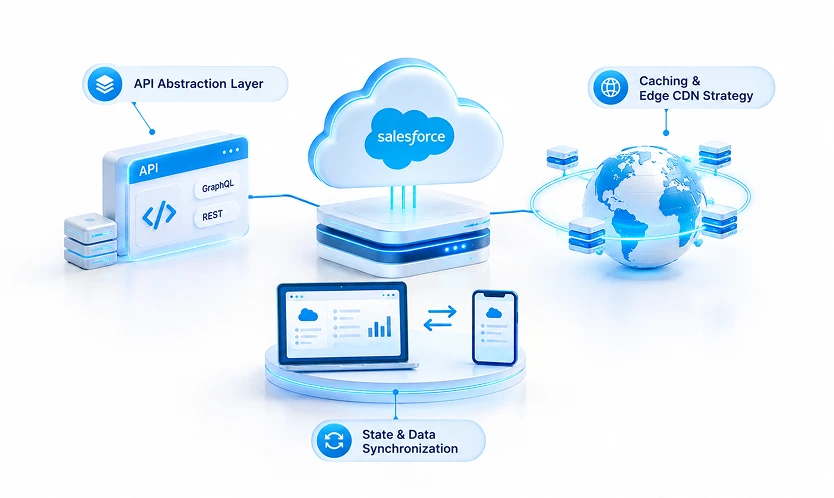
Deploying a headless architecture involves far more than simply replacing a layout. At TopTech, our specialists focus on three core building blocks to ensure your decoupled stack runs smoothly.
Core Delivery Pillars
- 1. API Abstraction Layer: Constructs unified GraphQL and REST endpoints to prevent data over-fetching, lower latency, and streamline request payload sizes.
- 2. Caching & Edge CDN Strategy: Distributes static UI assets across global networks to guarantee instant, localized load times for users worldwide.
- 3. State & Data Synchronization: Ensures real-time, bi-directional data integrity between client interfaces and Salesforce backend records.
Common Pitfalls to Avoid When Decoupling Salesforce
While composable enterprise systems unlock undeniable agility, implementing them without clear guidance can introduce unexpected complexity.
- Underestimating Initial Build Overhead: Building a custom front end requires upfront design, engineering, and continuous upkeep. If your primary goal is a standard internal portal, a traditional out-of-the-box template may remain the most cost-effective path.
- Neglecting Third-Party Plugin Integrations: Monolithic platforms often rely on plug-and-play marketplace extensions. In a headless environment, every third-party widget (such as review tools or chat software) must be connected via APIs.
- Ignoring Marketing Team Workflows: If you sever the front end without providing a headless Content Management System (CMS), your marketing team will rely on developers for simple text changes. Ensure non-technical staff maintain clear editing access via an integrated headless CMS.

Key Takeaways
- Strategic Decoupling: A headless architect separates your visual presentation layer from Salesforce back-end business logic to unlock maximum developer speed, design flexibility, and scalability.
- Performance Impact: Eliminating server-side layout bottlenecks helps organizations cut page load times by 20% to 50%, driving better Core Web Vitals and higher overall conversion rates.
- Omnichannel Scale: API-first architectures allow a single Salesforce core to power web apps, native mobile interfaces, physical kiosks, and AI agents simultaneously.
- Resilient Governance: Decoupled frameworks insulate core business logic, enabling front-end design teams to iterate rapidly without risking CRM database stability.
Architect Your Digital Future with TopTech
Transitioning to a composable ecosystem requires technical vision, platform expertise, and execution discipline. At TopTech, our senior enterprise architects specialize in decoupling complex Salesforce environments, enabling your business to deliver faster user experiences while keeping your core platform secure.
Ready to modernize your system architecture? Contact our technical leads today to schedule a comprehensive enterprise framework audit.