







Salesforce Pilots Its Own Software: Inside the Customer Zero Engine
Before an enterprise platform ships to thousands of global organizations, it should prove its worth under peak operational pressure inside its own walls. When Salesforce pilots its own software, it isn't running a minor QA check; it is stress-testing massive product releases like Agentforce directly across its own sales, support, and engineering teams. At TopTech, we believe this internal trial blueprint offers crucial lessons for any executive looking to roll out complex enterprise technology without breaking business continuity.
What Does It Mean When Salesforce Pilots Its Own Software?
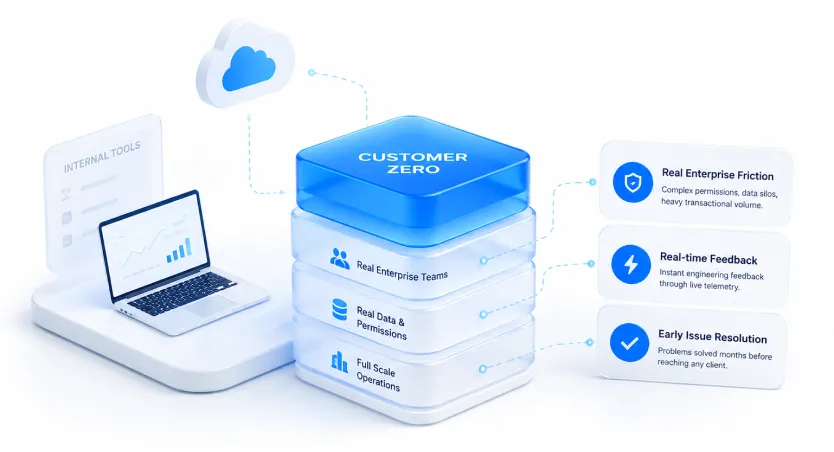
The practice of testing internal tools before shipping them to clients is often referred to as "eating your own dog food." However, Salesforce elevates this concept through a formal framework known internally as Customer Zero.
In this model, internal IT and operational teams become the very first enterprise customers for every unreleased feature. By acting as Customer Zero, the company forces its product engineers to confront real enterprise friction, such as complex permissions, data silos, and heavy transactional volume, months before any client signs a contract.
The Evolution of Internal Product Validation
- Traditional Beta Testing: Relies on external feedback loops, delayed bug reports, and isolated test environments.
- Customer Zero Pilot Framework: Deploys raw releases across live internal teams, enforcing real-time telemetry, instant engineering feedback, and immediate enterprise validation.
4 Pillars of the Customer Zero Pilot Framework
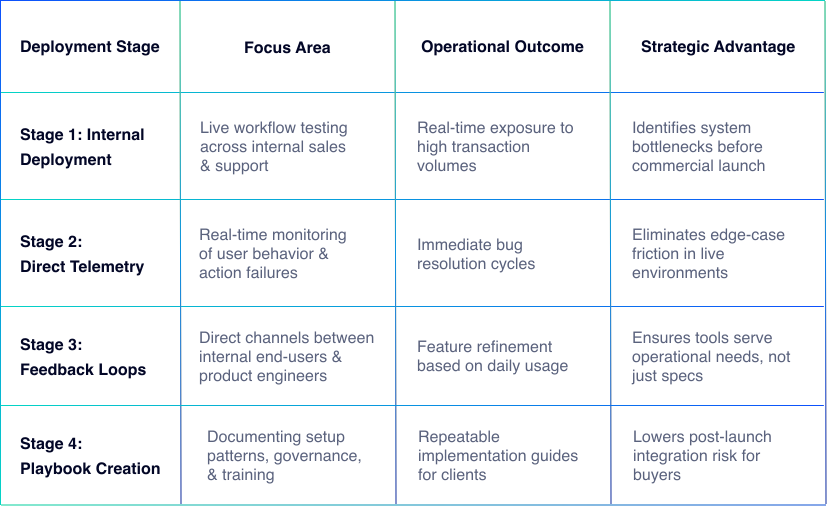
By examining how internal deployments operate, enterprise IT leaders can identify structural ways to validate their own platform upgrades.
Strategic Benefits: Why Internal Trials Drive Commercial Success
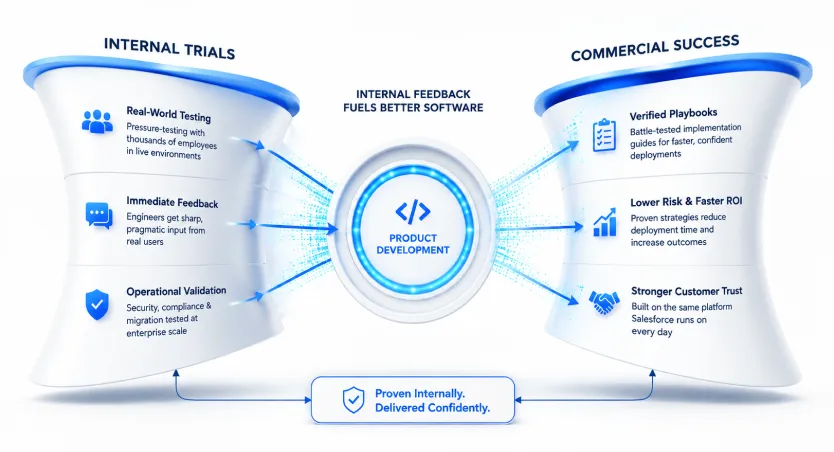
When Salesforce pilots its own software at enterprise scale, the benefits extend far beyond bug catching—it fundamentally reshapes how platforms are built and adopted.
1. Hardening Architecture Under Real-World Conditions
Staging environments rarely replicate the chaos of daily enterprise operations. By running new autonomous agents or data pipeline updates through its own global workforce, product teams observe how systems respond when thousands of employees query databases simultaneously. This pressure-testing ensures stability long before customer deployments begin.2. Bridging the Gap Between Engineering and Operations
Software engineers often build features based on theoretical requirements. When internal account executives or support reps use those features to hit actual quotas, the feedback loop gets sharp and pragmatic. If an agentic workflow takes three extra clicks or obscures critical context, the engineering team hears about it immediately from their own colleagues.3. Creating Verified Implementation Playbooks
One of the largest hurdles in enterprise software adoption is uncertainty around implementation. Because internal teams face the exact same compliance, security, and migration hurdles as external enterprise buyers, their trial runs yield proven, battle-tested deployment playbooks.Case Study: Deploying Agentforce as Customer Zero
The rollout of Agentforce provides a clear look at this strategy in action. Rather than launching autonomous AI agents exclusively as an external product, internal teams deployed agentic workforces across their own customer support and lead qualification channels first:
- Internal Case Triage: Autonomous agents were tasked with processing incoming support tickets from existing users, verifying account details, and executing routine account actions autonomously.
- Direct Efficiency Metrics: By resolving high-frequency requests internally, product managers validated the platform's action-to-output capabilities in real time, gathering telemetry on Agentic Work Units before public availability.
- Refining Guardrails: Testing internal permission sets allowed engineers to tighten security policies and data boundaries, ensuring agents never surface sensitive fields without explicit authorization.
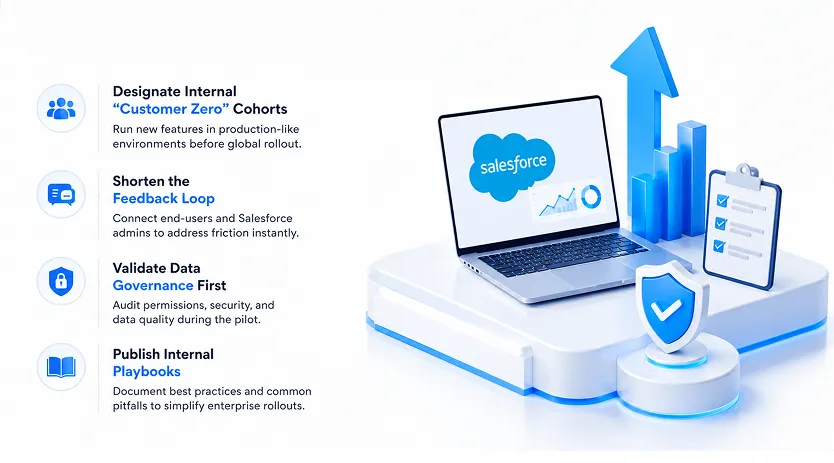
4 Lessons for Enterprise Leaders Rolling Out Salesforce Upgrades
You don't need to be a software vendor to benefit from the Customer Zero mindset. At TopTech, we advise enterprise clients to adopt these four principles during any major CRM upgrade or module launch:
- Designate Internal 'Customer Zero' Cohorts: Select a tech-savvy operational team to run new features in production-like environments before rolling them out globally.
- Shorten the Feedback Loop: Establish direct communication channels between your end-users (sales reps, service agents) and your Salesforce administration team to log friction points immediately.
- Validate Data Governance First: Ensure permission sets, field-level security, and data clean-up procedures are fully audited during the internal pilot stage.
- Publish Internal Playbooks: Document successful setup steps, common user mistakes, and workaround guides to streamline change management across remaining departments.
Key Takeaways
- Proven Validation: When Salesforce pilots its own software, it uses the Customer Zero framework to stress-test products like Agentforce under live operational pressure.
- Real-World Telemetry: Internal deployments expose platform bottlenecks, permission flaws, and workflow friction that staging environments miss.
- Pragmatic Engineering: Direct feedback from internal users ensures software features solve actual operational needs rather than theoretical requirements.
- De-Risked Adoption: Enterprise leaders can mirror this strategy by running internal pilot cohorts to refine setup playbooks before full-scale rollouts.
Elevate Your Enterprise Rollouts with TopTech
Adopting complex platform updates without disrupting your workforce requires strategic planning, rigorous testing, and platform expertise. At TopTech, our senior architects help enterprise teams design pilot programs, optimize data governance, and execute seamless implementations that drive measurable ROI.
Ready to de-risk your next platform deployment? Contact our implementation leads today to schedule a strategic workflow audit.